15 Union Square West

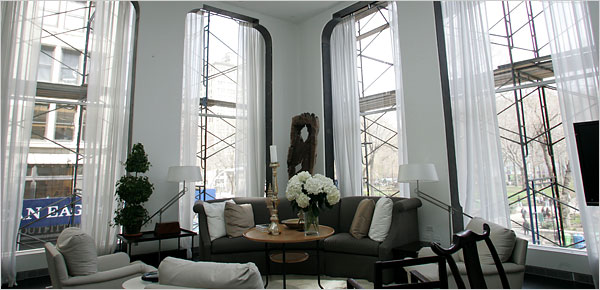
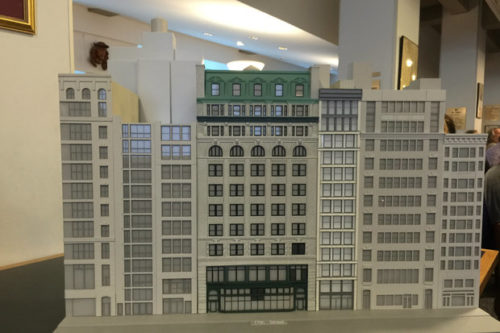
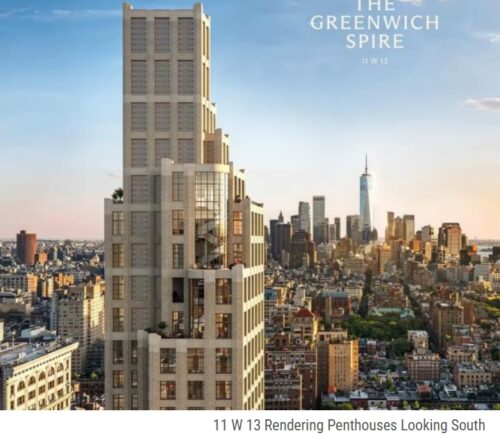
In case you haven’t seen the renderings for 15 Union Square West, here they are. And here’s one $4,100,000 listing. The interesting thing about this development is that it retains the original cast-iron window frames from the 19th-century while wrapping the whole thing in 21st-century glass. Take a close look when you walk by. And here’s the history of the building.  And a recent New York Times peek inside the model apartment.
Similar Posts

  • Hyatt Union Square Will Add Urban Farm

    The nonprofit behind the Union Square Greenmarket plans to open a new community space in the neighborhood to host events and classes on sustainability and nutrition, and provide a spot for other nonprofits in the city to gather near Union Square, according to GrowNYC Assistant Director Julie Walsh. The space, called “Project Farmhouse,” is expected to open at 76 E. 13th St., near Fourth Avenue, by November with a test kitchen, a conference room and a vertical grow wall with moving trays designed to rotate plants so they all get the ideal amount of water, fertilizer and light, said Kate Chura of GrowNYC, who is overseeing the project.

  • Reminder: Shareholders’ Meeting

    The annual shareholder’s meeting will take place on Wednesday June 30th at 7PM at the Seafarers’ and Interational House at 123 East 15th St, second floor.

    At the meeting, the Board of Directors will be seeking at least one new member. If you wish to become a candidate for the Board and have your name placed on the ballot, please feel free to provide a short biography of yourself via fax (212) 986-0002 or e-mail to ymartinez@akam.com. The Board will also welcome nominations at the meeting itself.

  • 14th St. Tech Hub Lands $120 Million

    Demolition of the building which a PC Richard & Son store occupied at 124 E. 14th St. will begin immediately followed by construction of a 21-story, mixed-use office building that will house the new Union Square tech hub. Suffolk Construction will be the project’s general contractor.

    RAL Development Services in a joint venture with Junius Real Estate Partners closed a $120 million construction loan from Bank OZK. Junius is a real estate investment unit of J.P. Morgan Private Bank, a division of J.P. Morgan Asset Management. Its focus is high yielding real estate equity and debt investments.

    The developers also signed a 99-year ground lease with the New York City Economic Development Corporation. The New York Post reported the joint venture has agreed to the following arrangements: It made an up-front payment of $5 million and will not pay rent for the first three years during construction and lease-up. Afterwards the annual base rent will be $2.3 million for the first five years. The rent will then increase by 2% every year through the 30th year. Following this period, the rent will be subject to fair market resets. A spokesperson for RAL confirmed these financing terms with GlobeSt.com.

    Last year, the city council approved the tech hub following New York City’s ULURP process. The steps were required to increase the as-of-right building height from 14 floors to 21 stories. 

    For 25 years, RAL will lease six of the floors to the non-profit Civic Hall, which will create a digital training center, a tech incubator, co-working spaces, event spaces and an urban food hall. RAL will lease the top 14 floors of the 21-story building at market rate. According to the RFP issued by NYCEDC, the tech hub is expected to create over 500 jobs in Union Square.

    Josh Wein, financial director of RAL, says, “In addition to the multitude of benefits this development provides for the City and its workforce, which have been designed to promote job creation and growth in the technology sector, we’ll be creating the finest modern office building in Midtown South.”

    Community groups including the Greenwich Village Society for Historic Preservation (now named Village Preservation) advocated for neighborhood protections to accompany approval of the tech hub. They supported the educational and public goals of the project but protested its development without inclusion of rezoning for surrounding neighborhood streets. They requested limited heights for new developments, removal of current incentives for hotel and dorm development, and the inclusion of affordable housing with new construction for a limited area around the center.

    The neighborhood organizations expressed they were concerned about an eventual destruction of the unique character the Village—starting with its now being referred to as Midtown South.