No More Mexican
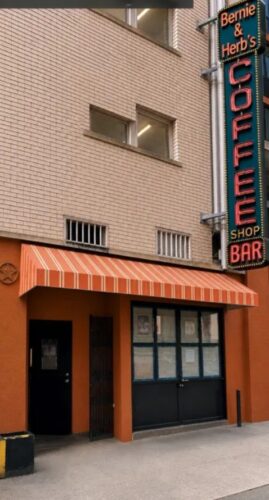
Mexicana Mama, the intimate Mexican joint on East 12th St., has shuttered.

According to this NY Times story:
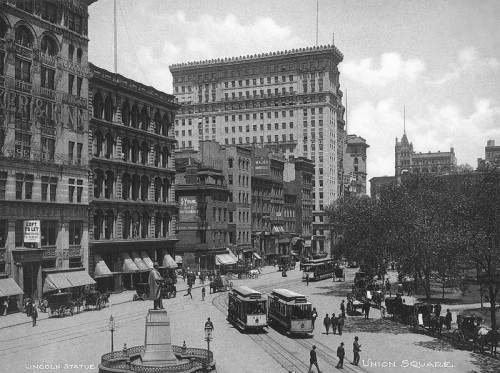
The city’s Department of Transportation has declared its pedestrian plaza on the north side of Union Square, the fourth such major street revamping along Broadway, an out-and-out success, despite some early qualms from residents.
The redesign, implemented about a year ago, banned most cars from the block of Broadway north of Union Square, between 17th and 18th Streets, and closed a traffic lane on Union Square North. Tables and chairs were placed on the closed-off areas, and the neighborhood’s green market was able to expand.
The idea was to simplify a particularly tricky intersection where a confusing jumble of traffic signals and two-directional car lanes had resulted in a string of pedestrian injuries.
But the plan initially met stiff opposition from residents and businesses in the area, who complained about traffic jams on residential streets and problems for delivery trucks. A raucous community board meeting resulted in outcry and a mass walkout from protesters.
One year later, the city’s traffic engineers say that the improvements, for cars and pedestrians alike, have been palpable. (Here’s a pdf link to the report.) And no businesses or store managers appear to have registered complaints with local officials.
Radar samples found that about 12 percent of cars on Broadway between 20th and 19th Streets were now exceeding the 30 mile-per-hour speed limit, down from 28 percent of cars before the changes. Pedestrians can navigate a shorter crosswalk at the north end of Union Square, and they are waiting a shorter time for a “walk” signal.
Bicycle riders, who benefited from an additional protected lane along East 17th Street, also appear to be enjoying the changes: the agency found a 16 percent jump in cyclists in the area on weekdays, and a 33 percent increase on weekends.
Still, automobile drivers now appear to be avoiding the stretch of Broadway south of Madison Square, where the street was reduced to a single lane of car traffic and the direct car connection through Union Square was severed.
The number of cars traveling on that stretch has dropped by about half since the plaza was installed, the report said. Some of those drivers may be choosing to take Fifth Avenue or Park Avenue South for southbound trips through the area, slightly slowing those routes. The average speed of taxis along Fifth Avenue fell slightly after the plaza was installed, and southbound trips on Park Avenue South took longer.
But the Transportation Department noted that average speed along West 18th Street, where residents were most fearful of jam-ups, rose by about 14 percent, to 7 m.p.h. from 6 m.p.h. And average speeds on Park Avenue South stayed relatively unchanged.
The Union Square Partnership, the neighborhood’s economic development group, conducted a door-to-door survey of area businesses, and 60 percent of those who responded said they were happy with the new traffic configuration. About 35 percent had no opinion.
Still to be determined: some illegal left turns at the always-dangerous perpendicular intersection of Union Square West and 14th Street. (Initially, the agency had hoped to close off parts of Union Square West entirely, but some businesses objected.) The city said it was working on new street adjustments to tackle the problem.
Rumor has it that the parking garage directly across from us at 12 East 13th St. is for sale and could be converted into offices, a hotel, or most likely 17 to 20 luxury condos. More construction to come????
From the NY Times:
The latest record store to close in New York is a big one: the Virgin Megastore in Union Square. Following its announcement last month that the Times Square Megastore would close down in April, Virgin Entertainment Group North America will shut down the Union Square shop in late May or early June, a spokeswoman said, confirming a report in Billboard. Virgin will also close its Market Street store in San Francisco in April. The New York closures will leave Manhattan without a large-scale record store. Thousands of music retailers have shut down in recent years as CD sales have plunged, and Virgin has been closing most of its locations around the country since it was bought by the real estate companies Vornado and Related in 2007, but its high-traffic New York stores were said to be profitable.
PLEASE READ: YOU MAY HAVE RECEIVED A LETTER FROM THE CITY IN ERROR:
Tens-of-thousands of city residents eligible for a popular condo and co-op tax break have received letters from the city incorrectly stating that they no longer qualify, according to city civic and co-op board leaders.
Late last week, co-op and condo owners began receiving the letter from the city Department of Finance stating that a revamped condo and co-op tax abatement bill passed by the Legislature in January meant they could not collect it. “Our records show that this unit is not your primary residence, so your abatement will be phased out,” the letter states. The new legislation only allows owners to claim the tax break on their primary residence, and no longer allows the break on secondary homes.
The problem was that many people received the letter at their primary residence—which is indeed still eligible for the full break, according to Warren Schreiber, co-president of the Co-Op and Condo Council in northeast Queens. Mr. Schreiber said in his own co-op of about 200 residences, some 45 people had received the letters— about 35 of whom actually count those units as their primary residence. That could make a difference of about $1,000 per unit on upcoming bills if not corrected, he said.
“Some people have been in their homes, 20, 30 or 40 years and are getting these letters,” said Mr. Schreiber. “I think what happened is that the Department of Finance’s records are out of date, but it’s causing a lot of confusion and chaos.”
Nearly two years ago, Finance Commissioner David Frankel acknowledged the department had erred on 15,000 property bills the city mailed that July because of a “computer glitch.”
But in this case, a Department of Finance spokesman said the agency had used available data to determine which of the city’s 360,000 condo and co-ops would qualify for the abatement, and automatically enrolled 230,000 of them. In instances where there was not enough information, the agency sent out 130,000 of the letters to homeowners saying were not eligible for the tax break.
Mary Ann Rothman, the executive director of the Council of New York Cooperatives & Condominiums, said she too had been contacted by several people who have received the letters—despite simultaneously receiving the state’s STAR tax rebate on the same property, which can only be claimed at one’s primary residence.
Still, she defended the city Department of Finance, arguing that it was simply sending the letters out to the large number of co-op and condo owners in an effort to make sure the city’s records were correct under the revamped program.
“This is making people nervous, but you have to remember that this is a total change in the way that the abatement is administered,” she said.
The letters the city sent to co-op owners directs them to send a form to an address in Maplewood, N.J., verifying that they are in fact receiving the abatement on their primary residence. The form is due on April 1, and city tax bills reflecting whether the abatement will still be granted will go out in June. Those no longer eligible for the abatement would retroactively have to pay 50% of the normal break in July, and would stop getting it altogether in July 2014.
But Mr. Schreiber said he was concerned that elderly property owners, those with disabilities or those who live elsewhere for the winter, would have their tax break incorrectly pulled.
The parameters of the new condo and co-op bill were originally hashed out in June 2012, but Gov. Andrew Cuomo at that time decided not to issue a message of necessity circumventing a three-day waiting period to pass it before the end of the legislative session. As a result, the city Department of Finance decided essentially not to collect hiked condo and co-op taxes under the expectation that the legislature would eventually pass the agreed-upon bill—which it finally did this January.
The revamped program offers greater benefits to middle-class owners, raising their tax abatements from 17.5% to, 26.5% next year and 28% in 2015 for properties whose average assessed value is less than $50,000. Units valued at more than $60,000 would get abatements of 17.5% over the next three years. Other previous aspects of the program—including one that allowed real estate speculators to claim abatement for secondary residences—were eliminated.