Fresh and Co. Is No Mo’

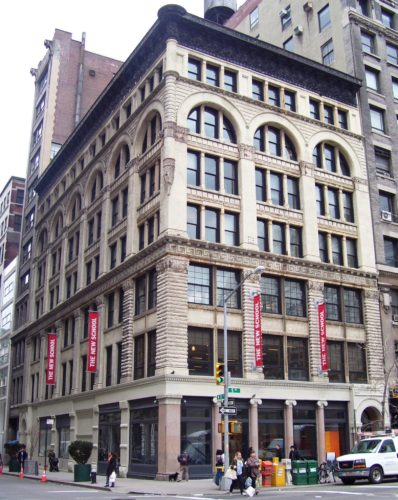
The corner of 4th Ave. and 13th St. is vacant once again.

Similar Posts

  • The Villager Writes About Union Sq.

    From the current issue of The Villager:

    When Danny Meyer opened the Union Square Cafe 24 years ago, area rents hovered around $8 per square foot. Today comparable space could rent for up to $400 per square foot.

    The business dilemma of astronomical rents was one of the issues under consideration on Mon., Nov. 10, at the Union Square Partnership Fall Forum titled, “Spotlight on Commercial Diversity in Union Square.”

    A panel of four experts joined moderator William H. Kelley, the Partnership’s director of economic development, in a roundtable discussion of the area’s commercial landscape.

    More than 75 residents and local business owners attended the forum in the Union Square Ballroom, in what one participant described as an attempt to “think outside the box and look forward.”

    Kelley explained the motivation behind the forum:

    “In its heyday, Union Square had this wonderful gathering of mom-and-pop businesses,” he told The Villager. “Recently, the area has become an international gathering of businesses.”

    Forum participants debated if this evolution was an inevitable result of growth or if there were there any tools the Union Square area or even city government could employ to create a more stable mix of large and small businesses.

    “I think Union Square is fascinating,” said panelist Larisa Ortiz, of Larisa Ortiz Associates and a co-author of “Real Estate Redevelopment & Reuse.” “It’s a model and a template that other cities have followed,” she said, noting the presence of iconic restaurants and the Greenmarket.

    According to an examination of gentrification trends by New York University’s Furman Center for Real Estate and Urban Policy, the number of businesses in the Union Square area rose almost 20 percent from 1990 to 2000, and have grown an additional 8 percent since 2000.

    Of those businesses, 11 percent represent food services and “accommodations.” The largest number of retail businesses — 23 percent — are clothing and accessory stores.

    Ortiz was concerned how the neighborhood could maintain its character when park-fronting property is privately owned and rents are set by overheated market forces.

    “Let’s help interesting speciality business and restaurant spaces on the side streets,” she suggested.

    To gauge interest in topics for the forum, the Partnership sent out a questionnaire in September to more than 3,500 local residents and businesses. A question asked what the most important issue facing Union Square is.

    The survey drew almost 300 responses. Topping the list of concerns, 43 percent of respondents said pedestrian congestion and safety are of primary importance. Another 24 percent believed addressing the neighborhood’s changing character was paramount. Six percent saw completing reconstruction of the square’s north end as important.

  • Like Waffles?

    The upscaling of 14th St. continues just three doors down, where Le Petit Belge has opened. Stop in for a Belgian waffle. $3.50 is a bit pricey for what’s essentially a zeppole, but they are pretty good, and who would have ever thought we’d have a takeout place on our block that features not one but six crystal chandeliers? New York magazine says: “When the waffles-to-go kiosk that Belgian expats Maor Livni and Greg Galel had planned for Logan Airport was nixed by a security-crazed fire marshal, the partners transplanted the business to Manhattan, where they’ve converted the former Tavalon tea shop into Le Petit Belge. A shrine of sorts to all things Belgian—or at least to Liège waffles, various imported chocolates, and paper cones full of mini-pancakes they call “poffys”—the shop takes a cannily ecumenical approach to New York snack food. That’s why it also serves frozen yogurt, provided by Berrywild, and rugalach made with Callebaut chocolate. And tea drinkers will still find the Tavalon line, in hot, frozen, and bubble varieties.”

  • Mayor Declares 14th St. Busway to Be Permanent

    From The Village Sun:


    On Monday, coinciding with phase one of the city’s reopening, Mayor de Blasio, in a bold show of support for mass transit, declared that the new 14th St. busway is now permanent.

    “The 14th St. busway, this has been a success by every measure,” de Blasio said. “I said, we’re going to do it, we’re going to see if it works, we’re going to see, do people ride the bus more? Does the bus go faster? Does it have any negative impact on the surrounding streets? And the jury is back. The answer is, it is a clear success. We are making the 14th St. busway permanent.”

    Launched in early October, the 14th St. busway was initially pitched as an 18-month pilot project. The stated plan was that, after the year and a half, the project would be assessed and then a decision made on whether to continue it. Now, however, after only eight months — with more than two of those months falling during the low-traffic COVID-19 lockdown — the busway has been decreed a permanent fixture on 14th St.

    The first-of-its-kind program bans cars from 14th St. between Third and Ninth Aves. between 6 a.m. and 10 p.m. seven days a week. Only buses and trucks are allowed as through traffic during those hours. Cars and taxis can enter the crosstown boulevard, but must then take their first right-hand turn off of it.

    The mayor also announced Monday that the city is now moving forward with creating five more busways around town.

    “I don’t think a busway like 14th St. was successfully achieved previously in city history,” de Blasio said. “The fact that today we’re saying 14th St. is now permanent [as a busway], five more coming in; it is the beginning of something really positive, obviously, between the busways, the Select Bus Service, all of these approaches have been working. And that opens the door to a very positive future for New York City. And this is a great time to do it because we got to give people confidence to come back to mass transit.”

    Streetsblog reported that the new busways will include Fifth Ave. between 57th and 34th Sts.; E. 181st St. from Amsterdam Ave. to Broadway; Main St. between Sanford St. and Northern Boulevard, in Flushing, Queens; Jamaica Ave. from Sutphin Boulevard to 168th St., in Jamaica, Queens; and Jay St. between Fulton and Tillary Sts., in Downtown Brooklyn.

    Along with the new busways, dedicated bus lanes will be added on E. 14th St. between First Ave. and Avenue C, as well as three other locations, in the Bronx, Queens and Staten Island. The E. 14th St. dedicated bus lanes will be added this month, the mayor said.

    Predictably, transit-advocacy groups were elated at the news that the 14th St. busway is not going anywhere.

    “The 14th St. Busway has been a resounding success,” said Danny Harris, executive director of Transportation Alternatives. “We are pleased to see it made permanent, and that more busways will soon be coming online. New Yorkers deserve a bus commute without being stuck in endless car traffic. Our streets must be a tool toward the city’s recovery, and we look forward to working with the Department of Transportation to bring more bus-only corridors across the five boroughs.”

    “As almost everybody knows, the busway is a historically great success,” said Danny Pearlstein, communications director for the Riders Alliance. “Riders are thrilled to see it made permanent and inspire imitations citywide.”