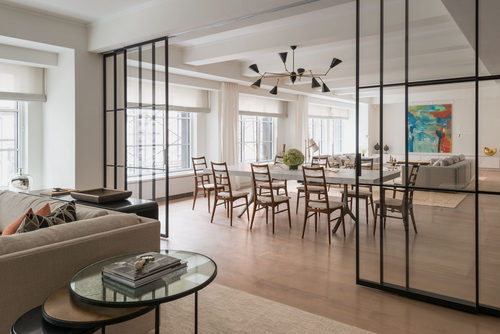
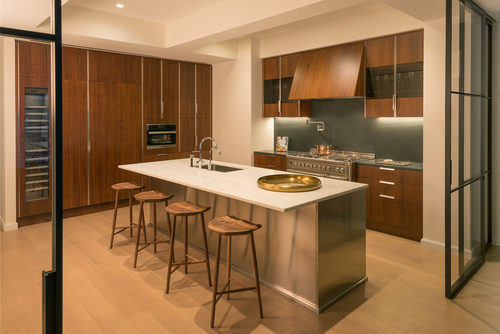
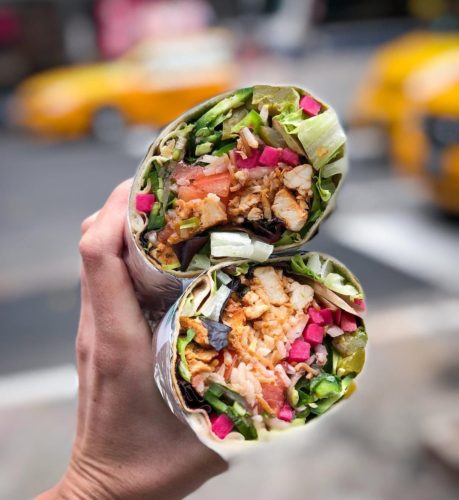
Coming Soon to University Place: Naya
Middle Eastern food, cooked on site, coming soon to 83 University Place. Visit eatnaya.com.

The Union Square area is becoming a high-tech hotbed. Mashable CEO Pete Cashmore was interviewed about why he brought his company here:
Last September, Pete Cashmore moved Mashable’s headquarters from 23rd Street to the heart of Union Square. What he found when he arrived was a climate he says is perfect for startups.
Factors that play into the business climate he found just a few blocks south of Mashable’s previous location include a fertile history of innovation, access to creative talent, and proven professionals. But in the end, what’s most attractive to Cashmore is good, old-fashioned, face-to-face interactions.
“Union Square has always been a meeting place, where people come together and share ideas,” Cashmore told me on Tuesday at an event at the British Residence of New York. “And now with it becoming a real hub of innovation it is a great place to be.”
Now employing about 140 people, Mashable’s offices occupy two floors on Fifth Avenue and 17th Street.
No doubt, part of what Cashmore found there was nurtured by venture capital firm, Union Square Ventures (USV), which was founded in 2004 and now manages $1 billion in assets across six funds. USV’s previous investment in New York City-based companies include Etsy (Nasdaq: ESTY), Tumblr (acquired by Yahoo for $1.1 billion), and MongoDB, which has raised $311 million venture capital.
But over the past year, the number of significant real-estate investments in Union Square shows that it’s much more than just Fred Wilson’s influence at work in the area.
The top three lease transactions of 2015 are BuzzFeed, which now occupies 194,000 square feet at 225 Park Avenue South, Gawker Media, which is in 58,900 square feet at 114 Fifth Avenue, and First Look Media in 58,206 square feet at the same location, according to a Union Square Partnership report published in May. New and expanded office tenants in Union Square also include Dropbox, Adobe Systems Inc. Hulu, Lippe Taylor, Pop2Life, Capital One Labs, The New Republic, and Compass.
The top sector in the area is “professional, scientific, and tech services,” with 1,514 firms, followed by retail with 1,393 firms. Among the top firms by number of employees is J. Crew, listed with 3,800 employees and Tory Burch, with 1,800. In total, 9,700 businesses are located within the half-mile radius of Union Square considered by the report, employing over 153,000 people.
What’s attracting all this talent? Not the rent. According to a May report by San Francisco-based real estate analytics firm Zumper, only two neighborhoods are more expensive than Greenwich Village, where Union Square technically is designated as being located. Average rent for a one bedroom apartment costs $3,850. In Chelsea it’s $3,920, and in Tribeca, $4,450. According to the same report, New York City was the second most expensive city in the United States, just behind San Francisco.
In an interview Wednesday, Union Square Partnerships managing director Scott Hobbs ventured his own theory as to why so many innovative companies are moving to his neighborhood. “The biggest reason is it’s a transportation hub,” he said. “You’ve got Williamsburg for creatives across the river, and midtown for business.” Trains that depart Union Square Station are the N, R, Q, 4, 5, 6, and L.
As for Cashmore, his explanation is much more simple. “What’s really great about Union Square is you can go get a coffee and bump into someone doing something interesting in tech,” he said.
Next week (October 14th to October 18th), material and equipment deliveries and installation work will continue on the academic floors inside the building.
The following week (October 21st to October 25th), material and equipment deliveries and installation work will continue on academic floors.
This weekend the site will be open on Saturday, October 12th for interior activities between the work hours of 7AM and 5PM as permitted by the City.
Enjoy beloved films under the stars at these free outdoor screenings presented by Alamo Drafthouse on four select Thursdays in Union Square Park. Arrive early to enjoy fun pre-show activities starting at 7 p.m., and bring your own blanket to secure a cozy spot before the movies begin at 8 p.m. Limited seating will be available on a first-come, first-served basis.
2025 Schedule:
July 24: The Muppets Take Manhattan
July 31: Men in Black
August 7: The Taking of Pelham One Two Three
August 14: 13 Going on 30
According to this NY Times story:
The city’s Department of Transportation has declared its pedestrian plaza on the north side of Union Square, the fourth such major street revamping along Broadway, an out-and-out success, despite some early qualms from residents.
The redesign, implemented about a year ago, banned most cars from the block of Broadway north of Union Square, between 17th and 18th Streets, and closed a traffic lane on Union Square North. Tables and chairs were placed on the closed-off areas, and the neighborhood’s green market was able to expand.
The idea was to simplify a particularly tricky intersection where a confusing jumble of traffic signals and two-directional car lanes had resulted in a string of pedestrian injuries.
But the plan initially met stiff opposition from residents and businesses in the area, who complained about traffic jams on residential streets and problems for delivery trucks. A raucous community board meeting resulted in outcry and a mass walkout from protesters.
One year later, the city’s traffic engineers say that the improvements, for cars and pedestrians alike, have been palpable. (Here’s a pdf link to the report.) And no businesses or store managers appear to have registered complaints with local officials.
Radar samples found that about 12 percent of cars on Broadway between 20th and 19th Streets were now exceeding the 30 mile-per-hour speed limit, down from 28 percent of cars before the changes. Pedestrians can navigate a shorter crosswalk at the north end of Union Square, and they are waiting a shorter time for a “walk” signal.
Bicycle riders, who benefited from an additional protected lane along East 17th Street, also appear to be enjoying the changes: the agency found a 16 percent jump in cyclists in the area on weekdays, and a 33 percent increase on weekends.
Still, automobile drivers now appear to be avoiding the stretch of Broadway south of Madison Square, where the street was reduced to a single lane of car traffic and the direct car connection through Union Square was severed.
The number of cars traveling on that stretch has dropped by about half since the plaza was installed, the report said. Some of those drivers may be choosing to take Fifth Avenue or Park Avenue South for southbound trips through the area, slightly slowing those routes. The average speed of taxis along Fifth Avenue fell slightly after the plaza was installed, and southbound trips on Park Avenue South took longer.
But the Transportation Department noted that average speed along West 18th Street, where residents were most fearful of jam-ups, rose by about 14 percent, to 7 m.p.h. from 6 m.p.h. And average speeds on Park Avenue South stayed relatively unchanged.
The Union Square Partnership, the neighborhood’s economic development group, conducted a door-to-door survey of area businesses, and 60 percent of those who responded said they were happy with the new traffic configuration. About 35 percent had no opinion.
Still to be determined: some illegal left turns at the always-dangerous perpendicular intersection of Union Square West and 14th Street. (Initially, the agency had hoped to close off parts of Union Square West entirely, but some businesses objected.) The city said it was working on new street adjustments to tackle the problem.