Composting Stinks. Which Bucket Is Right for You?

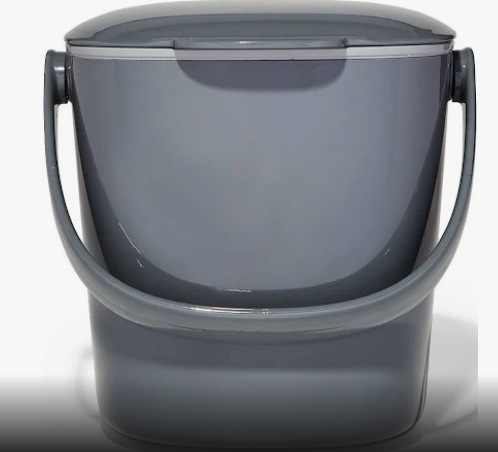
If you’re having trouble coming up with a composting strategy, read this article from the New York Times Wirecutter, which provides insight into the available options for composting bins and buckets.

Similar Posts

  • What is Nom!?

    Nom!, whatever that is, has signage up at University and 11th at the former site of Whitney Chemists. One can assume it will provide food of some sort, but no other details are available yet.

  • The Villager Writes About Union Sq.

    From the current issue of The Villager:

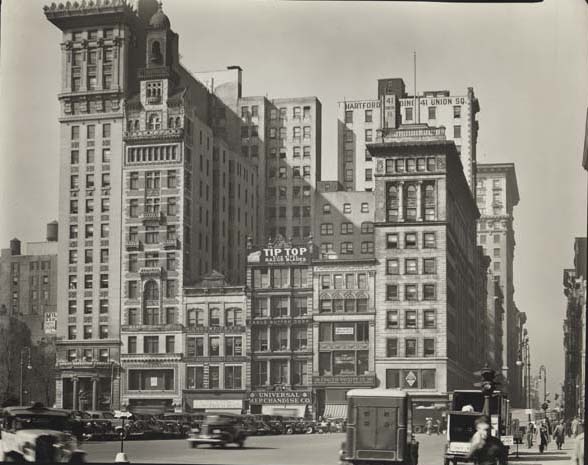
    When Danny Meyer opened the Union Square Cafe 24 years ago, area rents hovered around $8 per square foot. Today comparable space could rent for up to $400 per square foot.

    The business dilemma of astronomical rents was one of the issues under consideration on Mon., Nov. 10, at the Union Square Partnership Fall Forum titled, “Spotlight on Commercial Diversity in Union Square.”

    A panel of four experts joined moderator William H. Kelley, the Partnership’s director of economic development, in a roundtable discussion of the area’s commercial landscape.

    More than 75 residents and local business owners attended the forum in the Union Square Ballroom, in what one participant described as an attempt to “think outside the box and look forward.”

    Kelley explained the motivation behind the forum:

    “In its heyday, Union Square had this wonderful gathering of mom-and-pop businesses,” he told The Villager. “Recently, the area has become an international gathering of businesses.”

    Forum participants debated if this evolution was an inevitable result of growth or if there were there any tools the Union Square area or even city government could employ to create a more stable mix of large and small businesses.

    “I think Union Square is fascinating,” said panelist Larisa Ortiz, of Larisa Ortiz Associates and a co-author of “Real Estate Redevelopment & Reuse.” “It’s a model and a template that other cities have followed,” she said, noting the presence of iconic restaurants and the Greenmarket.

    According to an examination of gentrification trends by New York University’s Furman Center for Real Estate and Urban Policy, the number of businesses in the Union Square area rose almost 20 percent from 1990 to 2000, and have grown an additional 8 percent since 2000.

    Of those businesses, 11 percent represent food services and “accommodations.” The largest number of retail businesses — 23 percent — are clothing and accessory stores.

    Ortiz was concerned how the neighborhood could maintain its character when park-fronting property is privately owned and rents are set by overheated market forces.

    “Let’s help interesting speciality business and restaurant spaces on the side streets,” she suggested.

    To gauge interest in topics for the forum, the Partnership sent out a questionnaire in September to more than 3,500 local residents and businesses. A question asked what the most important issue facing Union Square is.

    The survey drew almost 300 responses. Topping the list of concerns, 43 percent of respondents said pedestrian congestion and safety are of primary importance. Another 24 percent believed addressing the neighborhood’s changing character was paramount. Six percent saw completing reconstruction of the square’s north end as important.

  • Water Alert!

    Dear Board Members, Residents, & Building Staff,

    While we are enjoying the nice rain-free weather lately, New York experienced truly little rainfall in October. In fact, it is the second-longest dry spell we have seen in 155 years. This means we are potentially facing water shortages if either the weather does not change and/or we do not cut back on water usage. This past Saturday, Mayor Adams asked city agencies to implement “water savings plans” and suggested that New Yorkers consider cutting back at the tap. While his announcement does not mandate any restrictions on water use, we want to be mindful of the situation. And as we manage hundreds of properties in the five boroughs, we feel it is important to pass along this message. For New Yorkers living in AKAM managed properties interested in doing their part, please consider the following water-saving measures:

    In the Bathroom:

    • Taking shorter showers will save 5 to 7 gallons a minute.
    • When taking a bath, fill the tub only halfway and save 10 to 15 gallons.
    • Install water-saving toilets, showerheads, and faucet aerators.
    • Place a plastic bottle filled with water in your toilet tank if you cannot switch to a low-flow toilet.
    • Turn off the faucet while shaving, washing your hands, or brushing your teeth. Faucets use 2 to 3 gallons a minute.
    • Do not use the toilet as a wastebasket, and do not flush it unnecessarily.


    In the Laundry Room/ Kitchen:

    • Run the dishwasher and washing machine only when full. Save even more by using the short cycle.
    • Install faucet aerators.
    • Turn off the water while washing dishes. Kitchen faucets use 2 to 3 gallons a minute. Filling a basin only takes 10 gallons to wash and rinse.


    Outside:

    • Use a self-closing nozzle on your hose.
    • Sweep your sidewalk or driveway instead of using water.
    • Water plants before 9am or after 7pm and do not overwater them.

    Other:

    • Repair leaky faucets and turn taps off tightly. A slow drip wastes 15 to 20 gallons each day.
    • Do not open fire hydrants.
    • If you see a leaking or running fire hydrant, please report it to 311 or fill out this online form so we can follow up.
  • The Greening of Union Square

    The whole city is going green! Several New York City Agencies and NYC advocacy groups, as well as USP, have launched a number of efforts to build a more sustainable future for the City of New York. Explore details on NYC’s foam ban, the Manhattan Solid Waste Advisory Board’s new Residential Recycling and Reuse Guidelines, and USP’s recent zero waste and sustainability efforts.

    Beginning January 1st, 2019, the City’s Foam Ban goes into effect. This means certain expanded polystyrene (EPS) items will be banned from sale, distribution, or use in New York City, including foam cups, containers, dish ware, and packing peanuts. Business owners can find more information from the Department of Sanitation (DSNY) here, to fully understand the law and get help transitioning to new materials to replace foam products.

    Following the announcement of the ban, NYC Mayor Bill de Blasio said, “New York City’s ban on styrofoam is long overdue, and New Yorkers are ready to start using recyclable alternatives. There’s no reason to continue allowing this environmentally unfriendly substance to flood our streets, landfills, and waterways.” USP is eager to see the positive effects this ban will have on our community and the larger NYC area.