Is This a Very Old Photo of Union Square?
Perhaps looking east at the southeast corner of the square, where 14th St. hits Union Square East? Before the statue of Washington was moved to its present location? 

 One of New York City’s top sushi chefs is back with her well-received omakase pop-up. Oona Tempest will revive Sushi by Bae next month — except this time it will be a permanent sushi counter in Union Square.
Sushi by Bae initially began as a sister pop-up to David Bouhadana’s proliferating Sushi by Bou back in 2017, and the idea is similar here. She’ll open a six-seat counter at 118 East 15th St., near Irving Place, on May 1, with a Sushi by Bou to open at the counter’s other six seats later in the month.
Sushi by Bae will follow a timed format, with a 90-minute, 15-course Edomae-style omakase, priced at $110. Diners can expect pieces of fish sourced from both Japan and the U.S. like a Japanese sea bream aged in kelp, cuttlefish, rosy seabass, and Hokkaido uni, though the menu will constantly evolve, Tempest says. Joshua Batista, who has worked with Sushi by Bae partner Simple Venue for a while, will lead the beverage program, which includes cocktails — an unusual element for omakase.
Tempest’s Sushi by Bae brand began as a pop-up inside Bouhadana’s Sushi by Bou within Meatpacking’s Gansevoort Market in 2017. Tempest, 26, was an apprentice of the late chef and respected NYC sushi master Toshio Oguma, working under him at acclaimed Upper East Side restaurant Tanoshi Sushi.
Though she’s most recently spent time at high-end, pricey sushi counters like Shoji at 69 Leonard Street and Sushi Ginza Onodera, she aims to keep things more casual at her own restaurant. She plans to follow Oguma’s philosophy in that it shouldn’t cost New Yorkers “an arm and a leg to have good sushi,” she says, one of the reasons she’s pricing the 15-course menu at $110 — to make it “more accessible.”
Sushi by Bae is located in the same space as sports bar Sidebar, though it has a separate entrance. It’ll be open from Tuesday to Saturday with three seatings per night, at 6 p.m., 7:30 p.m., and 9 p.m. Reservations are now open.
Sad! Joe Jr.’s diner on 6th Ave. at 12th St. is dying after 35 years. Here are all the sad details.
The Union Square Partnership has released its latest annual survey of people’s opinions about our neighborhood’s livability in terms of cleanliness, safety, landscaping, lighting, and quality of life. It makes for an interesting read. One highlight:
“USP is committed to enhancing livability in the Union Square 14th Street district through its Clean + Safe program. According to the 2024 survey results, satisfaction for district conditions improved or remained consistent compared to 2023 results, with satisfaction for public safety increasing by 15%. This notable increase follows USP’s deployment of Public Safety Officers (PSOs) in June 2023, and survey respondents noted that their patrols have had a positive impact in Union Square Park and the playground. Despite this improvement, respondents dissatisfied with the conditions expressed ongoing safety, sanitation, and quality of life concerns around the district, including the lack of City enforcement and City services for those in need. USP is dedicated to continuing investment in the PSO program and increasing coordination with City agencies and law enforcement in response to the community’s quality of life concerns.”
Pizzazz Pizza offers a new twist on the Neapolitan pizza classic. Their personal pies to go are made fresh and are the perfect thing to pick up for a picnic, dinner, or to fulfill your pizza cravings. Keep an eye out for their grand opening coming soon!
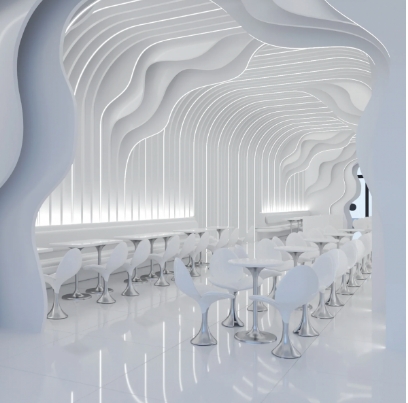
From Bedford + Bowery:
A Union Square institution, Coffee Shop, served its final brunch Sunday with one last samba performance by Maucha Adnet, her trio, and a pair of roving carnival dancers. Charles Milite and Eric Petterson– who own the restaurant with Karolyn Effer, wife of music producer Jellybean Benitez— were on hand for the farewell, and fondly remembered a New York magazine story about the Brazilian diner’s opening 28 years ago. It noted “the late-nighters who’ve been thronging Coffee Shop and its secret room in the back–artists, actors and young models wearing black tights and gold medallions.” At the time, Patterson said he wanted the 23-hour diner to recreate the feeling of Brazil: “the sensuality, the music, the friendliness of the people.”
Since then, Coffee Shop has held on, despite never really being a foodie destination; its basement, once an after-hours party spot for ’90s cool kids, recently served as a chill-out zone for off-duty models during Fashion Week. And its outdoor tables were a dependable spot for leisurely people-watching. But back in July, it was announced that the restaurant would close. “The times have changed in our industry,” Milite, himself a former model, told the New York Post. “The rents are very high and now the minimum wage is going up and we have a huge number of employees.”
Simply Grid announced today that it has launched a food cart electrification pilot in New York City’s Union Square. This is the first example of a mobile food vendor on New York City’s public streets using grid electricity rather than a noisy, polluting generator. Citywide, more than 3,000 mobile food carts create the equivalent pollution emissions of approximately 10,000 cars. This pilot, launched in conjunction with the New York City Mayor’s Office of Long-Term Planning and Sustainability, Con Edison, the NYC Department of Transportation, and Closed Loop Advisors, will last for up to a year and abate up to 9 metric tons of CO2.
Simply Grid’s technology allows lot owners and municipalities to provide grid electricity to mobile food vendors which makes them cleaner, quieter, and more profitable. Electricity is made available to these vendors via outlets in industry standard electricity pedestals which have been customized with proprietary metering controllers. The controllers connect wirelessly to Simply Grid’s cloud-based platform which manages customer accounts, metering, and billing. The system allows vendors to initiate service with their mobile phones and connect to the electric grid with cables they already use with their generators. Grid electricity is a significantly cheaper energy source for food vendors, and it also eliminates the pollution and noise associated with running a generator.