
The Villager Writes About Union Sq.

From the current issue of The Villager:

When Danny Meyer opened the Union Square Cafe 24 years ago, area rents hovered around $8 per square foot. Today comparable space could rent for up to $400 per square foot.

The business dilemma of astronomical rents was one of the issues under consideration on Mon., Nov. 10, at the Union Square Partnership Fall Forum titled, “Spotlight on Commercial Diversity in Union Square.”

A panel of four experts joined moderator William H. Kelley, the Partnership’s director of economic development, in a roundtable discussion of the area’s commercial landscape.

More than 75 residents and local business owners attended the forum in the Union Square Ballroom, in what one participant described as an attempt to “think outside the box and look forward.”

Kelley explained the motivation behind the forum:

“In its heyday, Union Square had this wonderful gathering of mom-and-pop businesses,” he told The Villager. “Recently, the area has become an international gathering of businesses.”

Forum participants debated if this evolution was an inevitable result of growth or if there were there any tools the Union Square area or even city government could employ to create a more stable mix of large and small businesses.

“I think Union Square is fascinating,” said panelist Larisa Ortiz, of Larisa Ortiz Associates and a co-author of “Real Estate Redevelopment & Reuse.” “It’s a model and a template that other cities have followed,” she said, noting the presence of iconic restaurants and the Greenmarket.

According to an examination of gentrification trends by New York University’s Furman Center for Real Estate and Urban Policy, the number of businesses in the Union Square area rose almost 20 percent from 1990 to 2000, and have grown an additional 8 percent since 2000.

Of those businesses, 11 percent represent food services and “accommodations.” The largest number of retail businesses — 23 percent — are clothing and accessory stores.

Ortiz was concerned how the neighborhood could maintain its character when park-fronting property is privately owned and rents are set by overheated market forces.

“Let’s help interesting speciality business and restaurant spaces on the side streets,” she suggested.

To gauge interest in topics for the forum, the Partnership sent out a questionnaire in September to more than 3,500 local residents and businesses. A question asked what the most important issue facing Union Square is.

The survey drew almost 300 responses. Topping the list of concerns, 43 percent of respondents said pedestrian congestion and safety are of primary importance. Another 24 percent believed addressing the neighborhood’s changing character was paramount. Six percent saw completing reconstruction of the square’s north end as important.

Similar Posts

  • Barry Benepe, The Father of NYC’s Farmer’s Markets, Had Died

    From the NY Times:

    Barry Benepe, an urban planner who in 1976 conceived of inviting farmers to truck their ripe tomatoes, peppery arugula and fresh corn to forlorn patches of New York City, delivering bustling markets and excitement to the city along with flavorful and healthy food, died on Wednesday at his home in Saugerties, N.Y., in the Hudson Valley. He was 96.

    New York’s popular Greenmarkets, the largest farmers’ market network in the country, helped start a national farm-to-table culinary movement. They are credited with saving thousands of acres of farmland in the region from development and reviving urban neighborhoods. Renowned chefs who discovered the bounties of fresh strawberries and zucchini blossoms were soon buying much of their seasonal produce from Greenmarket stalls.

    Mr. Benepe (pronounced BEN-eh-pea) raised grant money and worked the city bureaucracy to organize the first market with a colleague, Robert A. Lewis, whose role was to recruit wary farmers. During a decade of high crime and urban decay in New York, farmers feared that whatever money they made would be boosted before they escaped the city.

    Instead, the first Greenmarket — which kicked off in Manhattan in the summer of 1976 at East 59th Street and Second Avenue with a handful of upstate growers offering an open-air cornucopia — was an immediate success.

    “It could not have been a better location,” between two popular department stores, Mr. Benepe recalled in a 2022 interview with On Hand, a foodie newsletter. “We were halfway between Bloomingdale’s and Alexander’s. We were in the passage between the two, so you had to stop.”

    By contrast, the Union Square market — today the rock star of Greenmarkets — did not have a promising start. It opened later that year, but for weeks nobody came to visit the farmers who had set up in a park strewn with litter and known for drug sales. Mr. Benepe personally watered crab apple trees on the site.

    The market went on to anchor a neighborhood rebirth that included Danny Meyer’s Union Square Café and a multiyear improvement plan by the Parks Department.

    “We both loved the idea of the city benefiting from the revival of a European kind of lifestyle,” Mr. Lewis, whom Mr. Benepe hired in 1975 for his one-man planning firm, said in an interview. “He’d spent so much time in France and England. The daily shopping at the market. The fresh bread — this is Barry, a romantic.”

  • Latest New School Construction Update

    Next week (November 25th to November 29th ), material and equipment deliveries and installation work will continue on the academic floors inside the building.

    The following week (December 2nd to December 6th), material and equipment deliveries and installation work will continue on academic floors

    This weekend the site will be open on Saturday and Sunday, November 23rd and 24th for interior activities between the work hours of 7AM and 5PM as permitted by the City.

  • Irving Plaza Gets A Makeover

    Rock venue Irving Plaza is set to go quiet this summer for an eight-month renovation. The 150-year-old venue hosts its last scheduled show for the year on June 30—headlined by tropical band Guaco—before shutting down for work that is scheduled to last until next spring.

    Live Nation, the concert hall’s operator, announced the planned renovations this week along with the Polish Army Veterans Association, which has owned the building since 1948.

    The 3,300-square-foot hall was converted from a Polish-American community center into a concert venue in 1978. Since then, Irving Plaza’s marquee has listed big-name artists including Bob Dylan, the Foo Fighters, Radiohead and the Talking Heads. Paul McCartney played a surprise show there to a capacity crowd of about 1,000 on Valentine’s Day in 2015.

    But, as some Yelp reviews document, concertgoers have complained about the venue’s narrow interior and a layout that makes it difficult to buy a drink or use the restroom without missing segments of the show.

    Live Nation is promising that the venue will reopen with a revamped lobby, new bars, a downstairs VIP lounge and a remodeled mezzanine with a new configuration for box seats. A Live Nation spokesman said four new bathrooms are on the way as well.

  • Italian Pastry on the Way

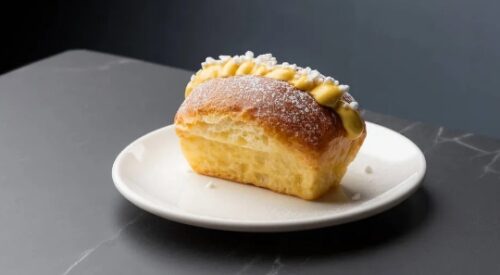
    Opening on May 21 at Broadway and 18th St., Minuto Bauli is the first U.S. outpost of the beloved Verona-based baking dynasty, Bauli. But this isn’t your average bakery. It’s a one-product wonderland dedicated entirely to a single, freshly baked, filled-to-order Italian treat: the Minuto Bauli.

    What is a Minuto Bauli, exactly? Think of it as the pastry equivalent of a mic drop. The dough, made with Bauli’s century-old Futura mother yeast, is crafted in Italy using high-quality ingredients like flour, eggs, butter and milk, then shipped to New York City, where it rises for 12 hours before being baked and dressed up right before your eyes. Guests can customize their treat with a selection of lush Italian creams, preserves, spreads and gourmet toppings.