University Diner Closes Today

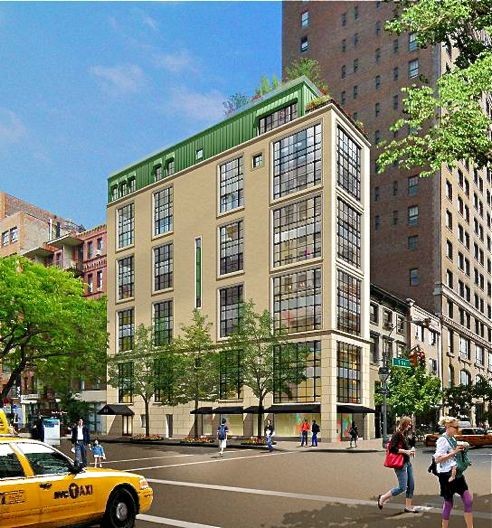
Sad news from University Place, where the University Diner, one of the last of its kind, is closing today. One can only wonder what will appear in its place, not to mention what will appear at the corner of University and 13th and the corner of Broadway and 14th. The malling of the neighborhood continues.

Similar Posts

  • Notice of Annual Shareholders’ Meeting

    The annual shareholder’s meeting will take place on Wednesday June 30th at 7PM at the Seafarers’ and Interational House at 123 East 15th St, second floor.

    At the meeting, the Board of Directors will be seeking at least one new member. If you wish to become a candidate for the Board and have your name placed on the ballot, please feel free to provide a short biography of yourself via fax (212) 986-0002 or e-mail to ymartinez@akam.com. The Board will also welcome nominations at the meeting itself.

  • Times Article on Rising Co-op Costs

    Here, in its entirety, is a recent New York Times article about maintenance increases and transfer fees and how co-ops are currently suffering.


    Co-op Fees Go Through the Roof

    CO-OPS across the city have raised their maintenance charges by as much as 15 percent in recent months, and one of the main causes is rising property taxes.


    Board members and building managers say that while maintenance increases averaged only about 5 percent last year, many co-op buildings are now dealing with double-digit increases.


    “Operating costs have gone up, but property taxes have skyrocketed,” said John Janangelo, the president of Bellmarc Property Management, which manages about 50 apartment buildings in Manhattan. He said that taxes for some of his buildings had risen by as much as 35 percent in 2009. “It comes at the worst time,” he added, “because financially everyone is suffering. You don’t want to pass through these huge increases because people can’t afford them, but you have no choice.”


    Property taxes went up at the start of the year when the city eliminated a 7 percent homeowner tax cut initiated in 2007, when the city was on better financial footing. But there is another reason for the increase. Buildings whose property values soared in recent years are experiencing even bigger tax increases because the assessed values of their buildings have gone up.


    Co-op boards routinely challenge their assessments and if the city’s Tax Commission does not reduce the assessments, boards can appeal in court. Because the process is lengthy, a building that has received a series of big assessment increases may not get relief for years.


    “Assessments have gone up based on last year’s market,” said David Kuperberg, the president of Cooper Square Realty, which manages about 200 co-ops and condominiums. “And that’s like kicking homeowners while they’re down,” he added, noting that assessments often take a while to catch up to the market.


    Marty Hoffman, the board treasurer of a 106-unit co-op on West 89th Street, said that the assessed valuation of the building had gone up every year in the last five years for a total increase of 107 percent. The property tax bill has gone up 55 percent, from $369,000 in 2004 to $574,000 in 2009. Taxes this year alone went up by $83,000, or roughly $783 more annually for each tenant shareholder.


    Because each year’s higher assessment is phased in over a five-year period, Mr. Hoffman’s building faces at least four more years of hefty assessment increases as the increases that were issued when the market was booming continue to kick in. Mr. Hoffman said that even though the tentative assessment increase for 2009-10 was only 1 percent, the building may have another tax increase of about $83,000 next year because of the phase-in of previous assessment increases. “Aside from the run-up in oil prices,” he said, “nothing has gone up as fast as real estate taxes.”


    Mr. Hoffman said cheaper fuel was the only reason his building had been able to limit its annual maintenance fee increase to 7.2 percent. “If oil prices hadn’t dropped, we would have been faced with a 15 percent increase.”


    Some operating costs have risen, however. Richard Montanye, a partner with the accounting firm of Marin & Montanye in Uniondale on Long Island, which works with hundreds of buildings in the city, said that water and sewerage charges went up 14.5 percent last year. “Housing costs in the city in the past four to five years have far outpaced inflation,” he said.


    At the same time, some revenue sources have been drying up for many buildings. Those with commercial tenants, especially retail outlets, have been hit hard by the recession, with many tenants asking for rent reductions because their sales volume has dropped off significantly.

    “Retail tenants are all hurting,” said Richard Siegler, a lawyer who represents about 150 co-ops, “and they’re all coming to boards and asking for relief. If the economy improves, then a lot of this will go by the by, but if not, then boards will have to contemplate losing tenants, even though they’d rather not have a vacancy.”


    Buildings that in a stronger market relied on income from flip taxes — a sort of transfer fee for each sales transaction — may also struggle now that sales volume throughout the city has been reduced to a trickle.


    Robert Berliner’s 277-unit building on Sutton Place has a 2 percent flip tax for outside buyers, which he said “was a pretty significant source of revenue in 2006 and 2007.” The building had used that income to meet operating costs, but because there are now so few apartments changing hands in the building, the board has shifted its flip tax revenue into its reserve fund. “We’re trying to be more realistic and more conservative in dealing with our budget,” he said.


    Mr. Berliner said that because real estate taxes are so high for the building, the board may consider raising the flip tax to 3 percent. Property taxes were just under $3 million last year and represented the single largest expense in the building’s $7 million budget.


    Mr. Berliner, who is the co-op’s board treasurer, said that the city raised the building’s assessment by 25 percent in 2008, but the building challenged the increase and got it reduced to 10 percent.

    “But when you consider the state of the economy and what’s happening in real estate values,” he said, “how the city could have come up with any increase in assessed valuation is beyond me.”

  • 15 USW Sale Shatters Local Records

    The sale of two units at Brack Capital Real Estate’s condominium conversion at 15 Union Square West may be set to shatter records for the sale of a single-family home on the square, the Corcoran Group’s Timothy Rothman told The Real Deal yesterday, since the new owner plans to combine them into one duplex spread. Rothman, a vice president at Corcoran on the Spiegelman team, represented a mystery foreign buyer in the deal for penthouse 11 and unit 10B at the building, which closed together yesterday for between $16 million and $17 million, he said, though he declined to give a specific price. The units were not on the market as a combination; their individual asking prices were $10.7 million and $6.5 million respectively. Rothman would not reveal the identity of the buyer due to a confidentiality agreement.

  • Union Square Night Market Coming

    Union Square will host its first-ever Night Market by Urbanspace. Union Square is no stranger to Urbanspace, as the company is responsible for putting on the park’s beloved annual Holiday Market. However, this will be the first time Urbanspace will operate an open-air food market during summer nights.

    The Union Square Night Market will run for four Thursdays, starting July 11th. More than 20 vendors will come together to bring New Yorkers some of the best bites in the city. It will all take place along the South Plaza of Union Square Park.

    So whether you’re interested in grabbing something to eat on your summer commute home or planning a date night, the Union Square Night Market will serve as the perfect venue for either!

  • Union Square, 1895

    Here’s a view of Union Square from 1985. The angle is from the southeast looking toward the northwest from the corner of 4th Ave. and 14th. Note that in the good ol’ days, the statue of George Washington was located in the intersection. It was later moved to the southern end of the park.