Spacious Now More Spacious
the co-working space, has opened a large new facility at 34 Union Square East, former home of TGI Fridays.

Next week (May 21 to May 25), Superstructure work will continue at the 18th floor level. The superstructure concrete work will be completed on the building buy the end of the month. Deliveries for the internal systems of the building have been ongoing and will continue, although they should not greatly affect the flow of pedestrian and road traffic.
The following week (May 28 to June 1), we will be working on the machine room levels on the 18th floor. Additionally we will have another crane on the Northwest corner of the site to help with a steel truss installation. This should not greatly affect pedestrian or road traffic. Deliveries for the internal systems of the building have been ongoing and will continue, although they should not greatly affect the flow of pedestrian and road traffic. The site will be closed on Monday, May 28th for the Memorial Day Holiday.
This weekend the site will be open on Saturday, May 19th for superstructure related activities between the work hours of 7AM and 5PM as permitted by the City.
To control noise levels within the site, work activities will be limited to the placement of formwork and concrete, plumbing and electrical work, rebar for concrete placement, using the crane and equipment to support all activities. Safety horns are used, and required by law, to coordinate lifting with the crane and to alert the workers of the danger overhead. We have directed the operators to limit the use of horns to one short sounding and to use the crane later in the day so as to avoid any excess noise. In addition to the normal work there will be a crew on 14th st. working on the Con Ed site connections.
People are raving about the smoothie/fruit salad truck dispensing treats on Broadway just below 14th St., in front of the Virgin store. According to Internet critics, the flavors are fresh and the prices are right.
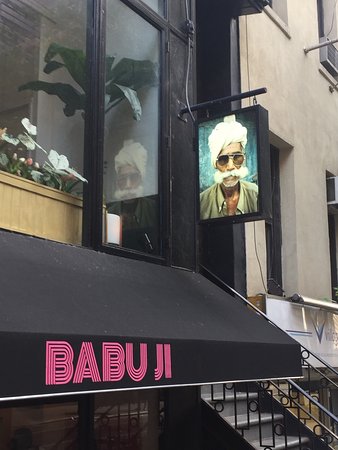 Another pandemic victim: Babu Ji on 13th St. It was the sixth restaurant to have a go of it in the space in the past 25 years.
Exemplifying a “15-minute neighborhood,” Union Square offers a wealth of local amenities including dining, shopping, culture, entertainment, and healthcare, all within walking distance or a short bike-ride. A true mixed-use neighborhood, Union Square’s residents, offices, retail, and institutions help sustain a vibrant public realm, with recent visitor traffic reaching 98% of 2019 levels. Office leasing remains active, with over 450K sf of office space leased since January 2022 across tech, finance, publishing, and other sectors.
Union Square’s 126 new businesses are comprised of 54% eateries, 28% retail, and 18% neighborhood services such as health and wellness. USP and creative partners work year-round to bring unique cultural, food, and art experiences to the square. Events like the eight-week Summer in the Square series, Urbanspace’s Holiday Market, and seasonal pop-ups draw foot traffic and support local business and arts communities.
Union Square-14th Street is home to high-profile institutions and headquarters across a range of sectors including technology, media, finance, and design. This rich mix of commercial tenants continues to be a major draw. Additionally, Union Square is center of gravity for live entertainment, arts, and culture. According to the data platform Replica, spending on entertainment doubled between 2019 and 2023 and visits in the district rose by 10% between 2022 and 2023, reaching a high of 98% compared to August 2019, a 10% higher average than Midtown Manhattan.
“Industry leaders like Microsoft, Sequoia Capital, and Wellington Management are choosing Union Square for their newest offices. Coupled with strong leasing activity at the ground floor, these new tenancies demonstrate the area’s appeal across sectors,” says Julie Stein, Executive Director, Union Square Partnership. “National retailers including Parachute, Crate & Barrel and Target are joining local favorites ABC Carpet, Fishs Eddy and Design Within Reach to solidify Union Square as a retail destination for interior design and home essentials.”
Union Square is a job center with 144K+ workers across sectors. Top employers include Con Edison, Mount Sinai Downtown, New York University, and The New School. In the coming year, the addition of national brands, and new and renovated hotels in the area will bring additional retail and hospitality job opportunities. This summer, Microsoft moved into its new 150K sf office space at 122 Fifth Avenue. The building’s ground floor is nearly fully leased with prominent brands Allbirds, Parachute, and Pandora, and Levain Bakery planning to open in early 2024.
Zero Irving (124 East 14th Street) has made headlines for leasing nearly 100% of its office space to major tech and finance firms including GameChanger (25K sf) and Sequoia Capital (13K sf). Additionally, the 10K sf Urbanspace food hall introduced 13 vendors to the 14th Street food scene. Over 65K sf of retail space has been leased since January 2022 to national brands, such as Petco’s 30k sf flagship location on Union Square East, and NYC favorites such as Hex & Co board game café, Sweet Chick, and Kazunori.
“Because we’re located in the heart of the NYC tech community, Civic Hall @ Union Square’s six floors of state-of-the-art training and conference center space at the new Zero Irving building will drive sustainable pathways to high-tech jobs. Civic Hall will help supply the tech workforce and spur innovation for industry leaders, the community, the City of New York, and beyond.” Seema Shah, Executive Director, Civic Hall
Looking ahead into the Fall, we are excited to welcome Upright Citizens Brigade, Crate & Barrel, Saatva, Mission Ceviche, and many more businesses to the neighborhood.
FÖRENA, a 50-unit luxury condominium development at 540 Sixth Avenue featuring 6K SF of new retail space for lease, finished construction in July 2023.
NYU is relocating the Wagner Graduate School of Public Service to 105 East 17th Street in Fall 2024, bringing over 860 students and over 200 faculty to Union Square.
Target will open a 33K SF store at 10 Union Square East, establishing over 75 new jobs and creating a retail anchor and local amenity for 14th Street.
Shanghai Square on 13th St. is now open for breakfast, serving traditional Chinese fare such as dim sum, Shanghai soup dumplings, and scallion pancakes. Is this innovative marketing or desperation? Is this bagel-and-croissant neighborhood ready for something so exotic at 8 in the morning?
from 6sqft:
Pioneering food hall operator Urbanspace is opening its latest outpost at Union Square reports the NY Post. They’ve leased 10,000 square feet at Zero Irving, the contested tech hub on 14th Street that will serve as office space, a technology training center and incubator, co-working spaces, and an event space when it opens in the first half of 2021.
Located at 124 East 14th Street, at the former site of the P.C. Richard & Son building, Zero Irving has faced opposition for years, as local preservationists and community groups felt that the rezoning required for the development should have included protections for the surrounding neighborhood, which is largely low-rise and residential.
Nevertheless, the $200 million project has been under construction for the past year. Despite the thousands of small business closings around the city, UrbanSpace founder and president Eldon Scott is confident in what will be his company’s fifth food hall in New York City. “We have the ideal business model to help the New York culinary world recover,” he told the Post.
UrbanSpace’s other locations are Urbanspace Vanderbilt near Grand Central (the first location, which opened in 2015), Lexington Avenue and 51st Street, 135 West 50th Street, and 152 West 52nd Street. They’re also behind the holiday markets in Grand Central, Union Square, Columbus Circle, and Bryant Park, as well as seasonal food market pop-ups like those at Madison Square and the Garment District.