Hard Times for Hardware
Basics Hardware is gone. University Place is changing quickly.

If you/re curious about how quickly Union Square’s retail rentals are recovering, go read this report.
New Yorkers go to Union Square for various reasons. Whether it be to peruse the farmer’s market, doing a little shopping, or just to catch their next train, but on Thursday, June 27 you can also get a free HIV test. To mark National HIV Testing Day, the Community Healthcare Network (CHN) will provide all-day free HIV tests and Hepatitis C screenings, as well as meningitis vaccines.
The HIV tests take 20 minutes for the results, so to make the wait more bearable there will be free massages, snacks, life-coaching, and stretching workshops while you wait. The CHN’s mobile van will be in the park from 9am-5pm, so stop by to find out your status, and get your meningitis vaccine before the weekend’s Pride festivities!
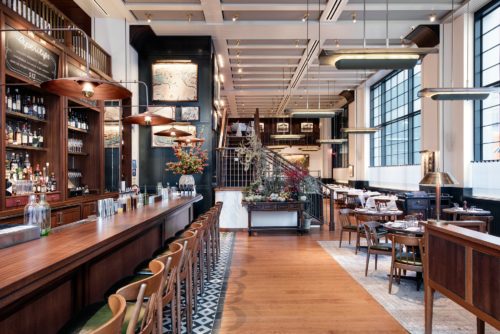 Vanity Fair reports:
A month after its opening, the new Union Square Café is booming. With two bars, an extensive mezzanine, and two spaces for private dining, it holds 198, as opposed to the 152 it could accommodate on 16th Street. Some of the old art is on the walls, and the menu, though revised, still includes the bibb and red-oak-leaf lettuces salad and the tuna burger (now the 19th Street Yellowfin Tuna Burger). It also features a New York strip steak with marrow mashed potatoes and radish salad, which two women friends, on separate evenings, pronounced the best they had ever eaten. On one of those nights, I had the roasted pork rack with shell beans, kale, and fennel-apple mostarda, which was choice. The other time I chose the very rich, very satisfying pappardelle with duck and chanterelle sugo, Brussels sprouts, and winter squash. For any and every meal I would recommend for dessert the pumpkin-bread pudding with caramelized white-chocolate ice cream, because it is unforgettable and unmatchable.
Like its sister restaurant, Gramercy Tavern, only two blocks away, Union Square Cafe now stays open straight through from noon to 10 P.M. The sharp, better-paid staff, still warm and welcoming, now wear white shirts, open at the neck
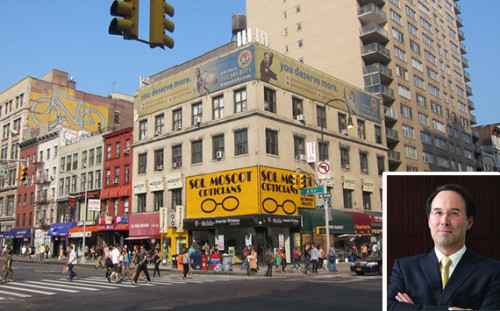 From The Real Deal:
Extell Development is in talks to buy a Greenwich Village commercial property with substantial development rights from the Duell family, the latest of several deals between the two. Gary Barnett’s firm is looking to acquire 530 Sixth Avenue on the corner of West 14th Street in Greenwich Village, Crain’s reported, citing a source familiar with the deal. The site is currently home to a 17,000-square-foot commercial building housing a Moscot Eyewear store, but public records show it has nearly 127,000 square feet of residential air rights.
Extell and the Duells have struck a number of deals in the past two months. In December, Barnett’s company bought two apartment buildings at 116 Seventh Avenue and 204 West 17th Street in Chelsea from the Duells, paying $11 million. He also bought 502 Third Avenue, a rental and retail building in Murray Hill, from the family for $11 million around the same time. Barnett also seems to be the buyer in the $20 million purchase of a rental building at 27 Washington Square North in the Greenwich Village last month, according to Crain’s. At the time of the purchase, the buyer wasn’t known. [Crain’s] – Ariel Stulberg
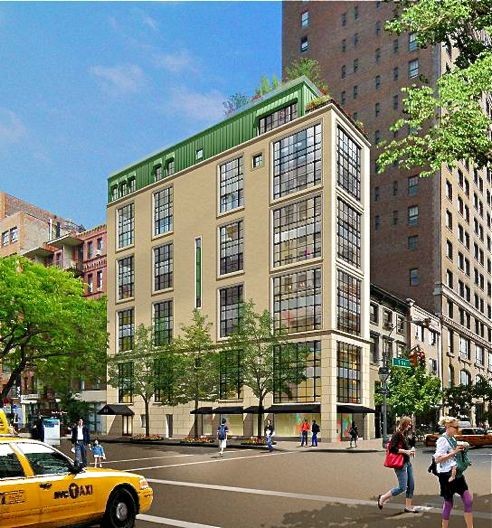 Here’s the latest rendering of the very expensive condos that will rise in the hole in the ground at 13th and 5th. Note there are only a few duplex apartments. They will be really pricey.
Twitter fans go here:
http://twitter.com/SaveUnionSqNYC