Unboxed
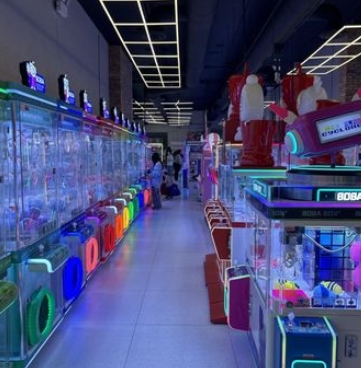
BobaBox, located in our building, didn’t last too long.

A private middle school partially funded by Facebook founder Mark Zuckerberg has released renderings of its planned interior — which is slated to open near Union Square this fall.
AltSchool, a private school that uses a technology-driven approach to design individualized lesson plans for students, has started building out its new school at 90 Fifth Ave. on the corner of 14th Street.
The school, which charges about $30,000 tuition per year, revolves around a Montessori-like curriculum and bills itself as a hybrid tech company and education startup. It’s the brainchild of a team of Silicon Valley types with a long history in companies like Google, where AltSchool CEO Max Ventilla worked for more than a decade.
The new space takes up an office-building floor previously occupied by The New School. It will be divided into two main areas — each of which have a classroom and group area space, as well as a larger communal area with a small kitchenette, a lunch area, and amphitheater-style seating.
The last piece of structural steel has been installed at the top of the New School building.
Next week (January 30 to February 3), Superstructure work will continue at and 3rd, 4th and 5th floor levels.
The following week (February 6 to February 10), we will continue superstructure concrete and slabs on 4th and 5th floor levels.
This weekend the site will be open on Saturday, January 28th for superstructure related activities between the work hours of 7AM and 5PM as permitted by the City. To control noise levels within the site, work activities will be limited to the placement of formwork and concrete, plumbing and electrical work, rebar for concrete placement, using the crane and equipment to support all activities. Safety horns are used, and required by law, to coordinate lifting with the crane and to alert the workers of the danger overhead. We have directed the operators to limit the use of horns to one short sounding and to use the crane later in the day so as to avoid any excess noise.
In addition to the normal work this Saturday we will be disassembling the small crane and removing it from the site. During the demobilization 13th St. will be closed as well as some lanes on 5th Ave. Pedestrian traffic will also be temporarily closed on the east side of 5th ave. for safety.
Please do not hesitate to contact me if you have any concerns or questions. Thank you
Jane R. Crotty
Senior Vice President
George Arzt Communications, Inc.
123 William Street, 22nd Fl.
New York, NY 10038
T (212) 608-0333
 Got $15 million? That’s what it will cost you to buy the burned out deli on the corner of 13th and 5th, which has stood vacant for the past two years. At that price, and given the zoning regulations, the most likely outcome would be a 10-story luxury condo building. But now doesn’t seem to be a good time for new condo development, so there are no takers. Even the New School, which as we all know is interested in increasing its presence in the area, has said that it is uninterested in the lot. Check out the fascinating history of the building.
The original location of New York mini-chain Heartland Brewery is slated to close on January 1. The Post reports that the building at 35 Union Square West has a new owner who is asking for more than the Heartland team can afford to pay. Owner Jon Bloostein says that when he opened the pub in 1994, the rent was $150,000 a year, but now the new landlord is asking for about $2 million a year.
The new and huge Union Square Park Playground looks like this.