New UPS Procedure on 14th St. Side

Due to an increasing number of thefts of UPS packages which are left unattended by the UPS delivery man outside shareholders’ doors, the procedure will now change. UPS will no longer leave packages unattended upstairs. Instead, he will place them behind the locked door off the lobby, to which he and Niall will have a key. A notification of package arrival will be on the bulletin board. You can then get in touch with Niall to get the package.


Please address any questions to Niall.

Similar Posts

  • Insanely Tempting Bakery Opens Just North of Union Square

    From Gothamist.com:

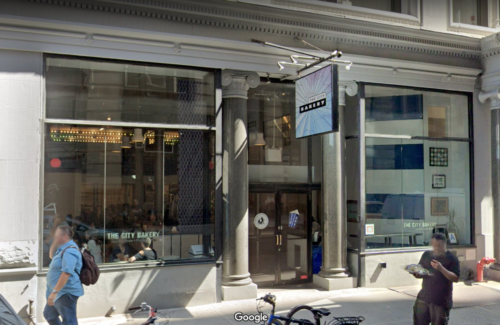
    Fragrant bricks of dark, heavily seeded rye. Marshmallow puffs studded with peanuts, a swirl of caramel hidden inside. Smorrebrod piled with bright, blackcurrant herring, or roasted chicken salad. Gooey cinnamon and chocolate “socials.” Hot rolls stuffed with ham and messy with eggs. Intensely chocolatey Truffle Logs. Ole and Steen, aka Lagkagehuset, a Danish bread and pastry shop which opened on Thursday in Union Square, wants to be your new everything bakery, a place to sit and enjoy a full meal, or grab a coffee and a treat (or a box of treats), or a loaf or three of bread. Given how exceptional everything I’ve eaten here over the past couple of days has been, it has a very good shot at doing just that.

    Founded in 1991, in Copenhagen, by Ole Kristofferson and Steen Skallebaek, there are more than 90 of these in Denmark and the UK, but the Union Square flagship is the bakery’s first outpost in this country. It will not surprise you that, like its international-chain baked goods predecessors here (Breads, Le Pain Quotidian, Maison Kaiser), the company is planning on opening more shops in NYC, and already have two spaces leased and under construction in Midtown. But until then expect legions of homesick Danes, Brits, and anyone who appreciates first-rate sweets and carbs to descend upon this spot.

    Most of the baking is done right here at the Union Square location—they prep the long-fermented dough at a commissary kitchen in Long Island City—but there’s still plenty of room left for seating for about 70, available at both the street level and in a large dining room/hang out spot downstairs. The real action, of course, is up front, with breads and pastries stacked high in the window looking out onto Broadway and at the long counter just inside the door. Even during the general mayhem of opening day, the young staff was speedy, efficient, and eager to answer the many questions thrown at them by Lagkagehuset newcomers.

    The menu is long and appealing, but a few highlights from a couple of preview events these past few days include an insanely rich and delicious Peanut Pie, which is basically a chocolate covered brownie stuffed with peanuts and caramel; the dense and chewy loaves of Rugbrød, or Danish rye bread; the Chistianshavner, a fluffy fruit tart, available in small or large sizes, and featuring one of the best crusts—hazelnut with “cookie crumble”—you’ll ever eat; and the Marzipan Slice, which is actually more like a log, and will satisfy that very specific almond-cake craving like few other pastries in town.

    In addition to the breakfast dishes (Skyr Yoghurt Pots, bowls of Porridge) and an array of sandwiches and salads, there’s also hot food such as Chicken Meatball Stew, Brandt Beef Soup, and Herb Roasted Salmon. Coffee, juices, beer, and wine provide liquid refreshment.

    Ole and Steen: Lagkagehuset is located at 873 Broadway between 18th and 19th Streets and is open weekdays from 6:30 a.m. to 10 p.m., and on weekends from 7:30 a.m. to 10 p.m. (929-209-1020; oleandsteen.us)

  • Times Article on Rising Co-op Costs

    Here, in its entirety, is a recent New York Times article about maintenance increases and transfer fees and how co-ops are currently suffering.


    Co-op Fees Go Through the Roof

    CO-OPS across the city have raised their maintenance charges by as much as 15 percent in recent months, and one of the main causes is rising property taxes.


    Board members and building managers say that while maintenance increases averaged only about 5 percent last year, many co-op buildings are now dealing with double-digit increases.


    “Operating costs have gone up, but property taxes have skyrocketed,” said John Janangelo, the president of Bellmarc Property Management, which manages about 50 apartment buildings in Manhattan. He said that taxes for some of his buildings had risen by as much as 35 percent in 2009. “It comes at the worst time,” he added, “because financially everyone is suffering. You don’t want to pass through these huge increases because people can’t afford them, but you have no choice.”


    Property taxes went up at the start of the year when the city eliminated a 7 percent homeowner tax cut initiated in 2007, when the city was on better financial footing. But there is another reason for the increase. Buildings whose property values soared in recent years are experiencing even bigger tax increases because the assessed values of their buildings have gone up.


    Co-op boards routinely challenge their assessments and if the city’s Tax Commission does not reduce the assessments, boards can appeal in court. Because the process is lengthy, a building that has received a series of big assessment increases may not get relief for years.


    “Assessments have gone up based on last year’s market,” said David Kuperberg, the president of Cooper Square Realty, which manages about 200 co-ops and condominiums. “And that’s like kicking homeowners while they’re down,” he added, noting that assessments often take a while to catch up to the market.


    Marty Hoffman, the board treasurer of a 106-unit co-op on West 89th Street, said that the assessed valuation of the building had gone up every year in the last five years for a total increase of 107 percent. The property tax bill has gone up 55 percent, from $369,000 in 2004 to $574,000 in 2009. Taxes this year alone went up by $83,000, or roughly $783 more annually for each tenant shareholder.


    Because each year’s higher assessment is phased in over a five-year period, Mr. Hoffman’s building faces at least four more years of hefty assessment increases as the increases that were issued when the market was booming continue to kick in. Mr. Hoffman said that even though the tentative assessment increase for 2009-10 was only 1 percent, the building may have another tax increase of about $83,000 next year because of the phase-in of previous assessment increases. “Aside from the run-up in oil prices,” he said, “nothing has gone up as fast as real estate taxes.”


    Mr. Hoffman said cheaper fuel was the only reason his building had been able to limit its annual maintenance fee increase to 7.2 percent. “If oil prices hadn’t dropped, we would have been faced with a 15 percent increase.”


    Some operating costs have risen, however. Richard Montanye, a partner with the accounting firm of Marin & Montanye in Uniondale on Long Island, which works with hundreds of buildings in the city, said that water and sewerage charges went up 14.5 percent last year. “Housing costs in the city in the past four to five years have far outpaced inflation,” he said.


    At the same time, some revenue sources have been drying up for many buildings. Those with commercial tenants, especially retail outlets, have been hit hard by the recession, with many tenants asking for rent reductions because their sales volume has dropped off significantly.

    “Retail tenants are all hurting,” said Richard Siegler, a lawyer who represents about 150 co-ops, “and they’re all coming to boards and asking for relief. If the economy improves, then a lot of this will go by the by, but if not, then boards will have to contemplate losing tenants, even though they’d rather not have a vacancy.”


    Buildings that in a stronger market relied on income from flip taxes — a sort of transfer fee for each sales transaction — may also struggle now that sales volume throughout the city has been reduced to a trickle.


    Robert Berliner’s 277-unit building on Sutton Place has a 2 percent flip tax for outside buyers, which he said “was a pretty significant source of revenue in 2006 and 2007.” The building had used that income to meet operating costs, but because there are now so few apartments changing hands in the building, the board has shifted its flip tax revenue into its reserve fund. “We’re trying to be more realistic and more conservative in dealing with our budget,” he said.


    Mr. Berliner said that because real estate taxes are so high for the building, the board may consider raising the flip tax to 3 percent. Property taxes were just under $3 million last year and represented the single largest expense in the building’s $7 million budget.


    Mr. Berliner, who is the co-op’s board treasurer, said that the city raised the building’s assessment by 25 percent in 2008, but the building challenged the increase and got it reduced to 10 percent.

    “But when you consider the state of the economy and what’s happening in real estate values,” he said, “how the city could have come up with any increase in assessed valuation is beyond me.”