Annual Meeting on July 22nd
Reminder: The annual shareholders’ meeting will take place on July 22nd at 7PM – 9PM at the usual place: The Seafarers and International House at 123 East 15th St. on the second floor.

The rumor is quashed. Walmart may be looking at 6th Ave. but has no interest in Union Square according to the Daily News.
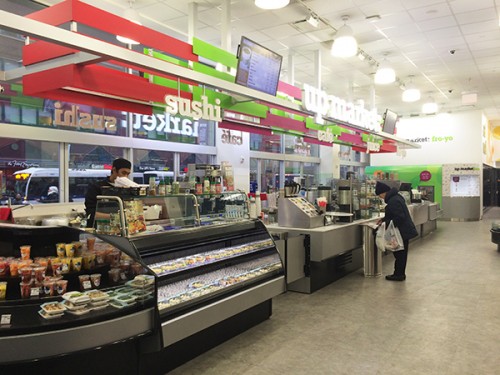 Walgreens has finally been renovated, and the result is a snack shop on steroids with the actual drug store part upstairs and down a hall. Weird.
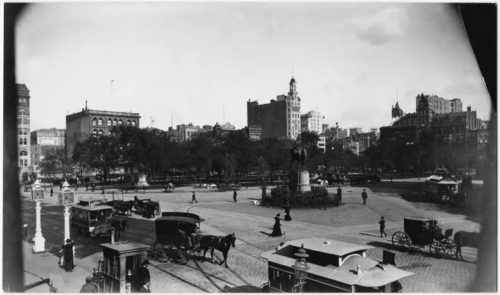
Here’s a view of Union Square from 1985. The angle is from the southeast looking toward the northwest from the corner of 4th Ave. and 14th. Note that in the good ol’ days, the statue of George Washington was located in the intersection. It was later moved to the southern end of the park.
Visit Koi, at 32 Union Square East. They say:
A celebration, a date or just a relaxing break in the day, there is always a reason to get together around a cup of KOI tea. KOI brings joy to the world. Freshly brewed tea and flavorful ingredients, prepared with passion are the key to KOI’s authentic taste and the reason why people come back again and again. In each and every KOI store, the staff is keen to share our happiness and love of tea with you. They do their best every day to make your experience memorable. Hear the sound of tea being brewed, of ice being crushed, and of laughter. Smell the aroma of our freshly prepared ingredients. Be excited by the chewiness of our milk tea pearls. Enjoy the fun and comfortable surroundings. And the warmth of our tea shakers. With KOI, happiness happens naturally.
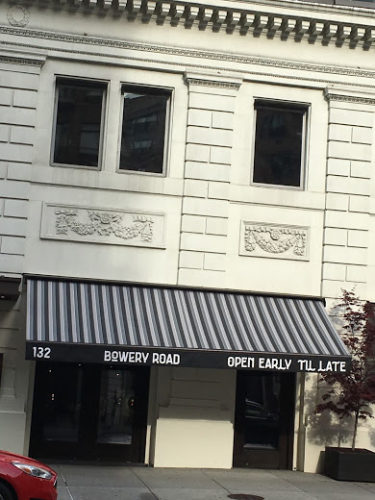 A new bar-restaurant is now open at the Hyatt Union Square
At Bowery Road, a neighborhood American restaurant, Chef Ron Rosselli’s flavorful and thoughtfully prepared dishes are inspired by long relationships with local farmers and purveyors and loaded with seasonal produce from the Union Square Greenmarket. The restaurant takes its name from its location on 4th Avenue, which was formerly called Bowery Road when it served as the pathway to Peter Stuyvesant’s farm.
Located directly off the lobby, Bowery Road is open from 7am-11pm for breakfast, lunch, dinner and weekend brunch.
Rosselli has also worked at Locanda Verde and The Standard Grill.
The hotel now also sports The Library of Distilled Spirits, which: “pays tribute to liquor makers and their craft with over 700 bottles made around the world. Explore the collection neat, or shaken and stirred into more than 150 classic cocktails. Barkeepers and encyclopedic volumes of single spirits will help you choose.”
The Fourth and Singl, the hotel’s two dining-drinking options, have closed. The two new establishments are operated by APICII, “a multi-concept restaurant company.”
Check out the renovated YMCA on West 14th St. at the open house on Sunday, September 13 from 10-2. Kids are welcome, and there will even be a rooftop carnival.