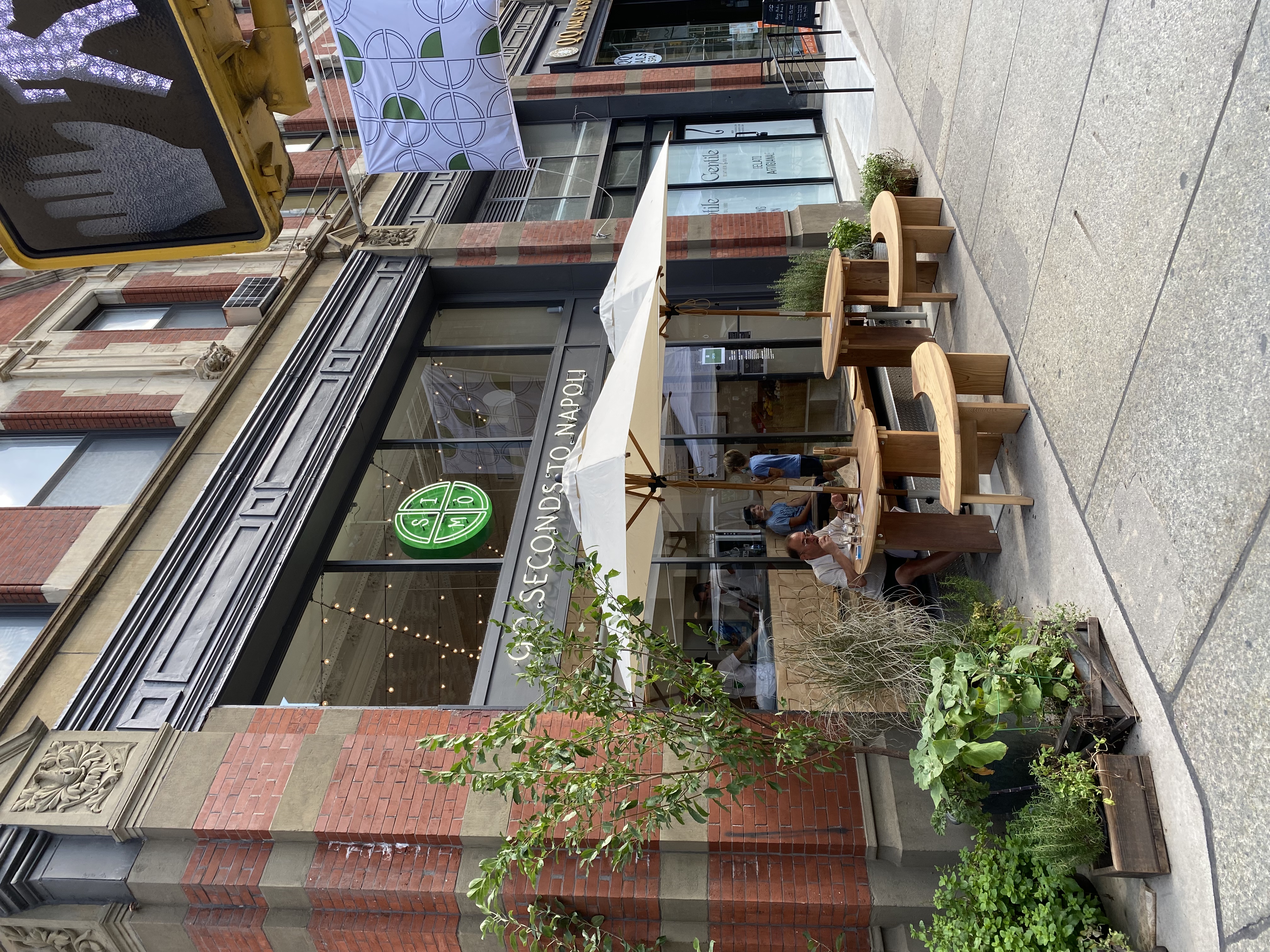
90 Seconds to Napoli
Now open on University after a very long delay: Simo, authentic pizza from the south of Italy.

Reminder: the co-op’s annual meeting takes place on Monday, January 30, at 7PM at the International Seafarer’s House, 123 East 15th St. second floor (take the stairs to the right of the entrance for easiest access).
The whole city is going green! Several New York City Agencies and NYC advocacy groups, as well as USP, have launched a number of efforts to build a more sustainable future for the City of New York. Explore details on NYC’s foam ban, the Manhattan Solid Waste Advisory Board’s new Residential Recycling and Reuse Guidelines, and USP’s recent zero waste and sustainability efforts.
Beginning January 1st, 2019, the City’s Foam Ban goes into effect. This means certain expanded polystyrene (EPS) items will be banned from sale, distribution, or use in New York City, including foam cups, containers, dish ware, and packing peanuts. Business owners can find more information from the Department of Sanitation (DSNY) here, to fully understand the law and get help transitioning to new materials to replace foam products.
Following the announcement of the ban, NYC Mayor Bill de Blasio said, “New York City’s ban on styrofoam is long overdue, and New Yorkers are ready to start using recyclable alternatives. There’s no reason to continue allowing this environmentally unfriendly substance to flood our streets, landfills, and waterways.” USP is eager to see the positive effects this ban will have on our community and the larger NYC area.
From Metro:
The L train “slowdown” will come with bus priority on 14th Street after all.
The de Blasio administration will ban private through-traffic on 14th Street between Third and Ninth avenues as part of a new pilot street design to help speed up buses during the L train’s Canarsie tunnel reconstruction, according to a draft release of the plans obtained by amNewYork.
But the changes won’t come until June, more than a month after the subway rehabilitation work begins.
Under the city’s plans, the new stretch of 14th Street will consist of four lanes, two in each direction: the center lanes will be dedicated to bus and truck traffic, while the outer curbside lanes will be reserved for truck loading and local traffic looking to make pickups, drop-offs or to access garages along the block.
Private vehicles in these lanes will be required to turn right, off the street, at the next possible opportunity and left turns will be barred. The city, in the draft release, said it drew inspiration from the King Street project in Toronto, where similar vehicular restrictions were put in place to improve cripplingly slow streetcar service on the major city artery.
A City Hall spokesman did not immediately respond to questions on the draft plan and declined to confirm its details.
New M14 Select Bus Service will roll out with the street changes in June, along with additional painted pedestrian space at intersections. The city plans to use automated cameras to enforce the rules of the road.
The city Department of Transportation will conduct “significant outreach,” including to the five different community boards overlapping 14th Street, and will promote education campaigns for people who commute on the block, the draft release states. There doesn’t appear to be any space dedicated for parking in the plan.
The city also plans to announce that bike infrastructure projects on Manhattan’s 12th and 13th streets, as well as Grand Street in Brooklyn, will be made permanent. Grand Street’s protected bike lanes will be adjusted to add more loading zones and metered parking, and to “help accommodate the needs of industrial businesses along this section of the corridor,” according to the draft release.
Under the original plan, the city had pitched a bus-only corridor along 14th Street for 17 hours of the day, but from the outset, the DOT had assured that local pickups and drop-offs would be accommodated.
The city has been criticized for dragging its feet on the fate of 14th Street. The new design comes just days before L train tunnel reconstruction begins Friday evening. Advocates have long called for a dedicated busway on 14th Street to help alleviate potentially dangerous overcrowding at stations during the work, which will take place during nights and weekends for 15 to 18 months.
During the night-and-weekend work, the MTA will run three trains per hour, at 20-minute intervals, between the Bedford Avenue station and through Manhattan. That service schedule translates to an 80% reduction in trains at certain hours. The authority advised riders this week that they may not be able to even fit on the first trains rolling into their stations.
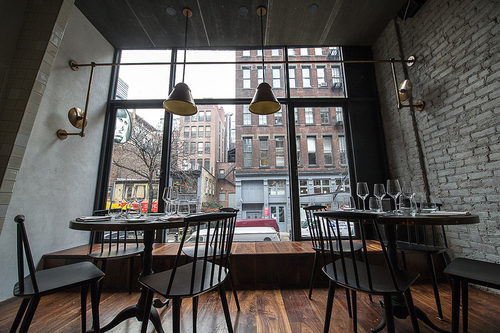 http://ny.eater.com/archives/2014/01/allonda_2.php
All’Onda is open, and it’s lovely inside.
The MTA is still chipping away at improvements on the L train, having announced a new escalator coming into service at the Union Square station to service the 19,000 pre-pandemic riders that shuffle on and off the platform every hour during the week.
This installation, designed to ease congestion through the busy interchange, follows elevators paired with a new entrance to the L train’s First Avenue station near Avenue A and switch replacements on the 4-5-6 near Union Square in recent months.
These improvements were funded by the MTA prior to the financial crisis they currently face due to COVID-19.
“This new escalator is another achievement for the larger L project team that, delivered that huge project early and below budget,” MTA Chief Development Officer Janno Lieber said. “Even in the midst of the COVID-19 pandemic we’re using innovative strategies to deliver customer improvements faster and at lower cost than ever before.”
Judy McClain, Chief of Operations Planning at New York City Transit, says that because the L train platform at this location is one of the most congested during pre-pandemic levels of ridership the escalator is one of the fastest in subway system; it can move up to 92 people per minute.
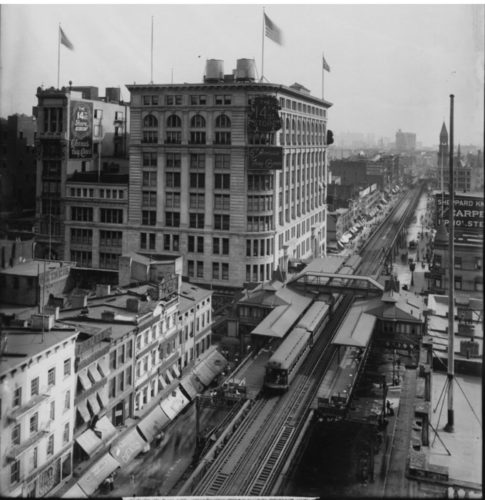
This image looks south on 6th Avenue from 14th St. in 1909. It’s hard to imagine a time when there were so many elevated trains.