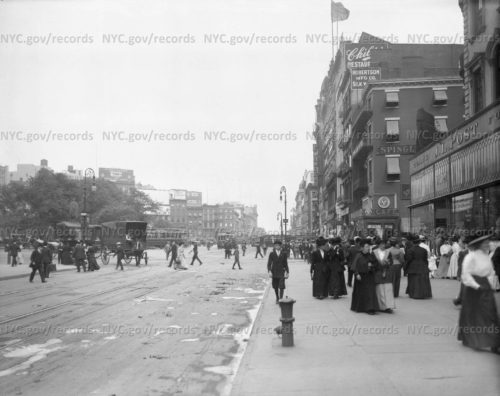
The Forbes Building Has Been Sold To…
NYU, which will lease it back to Forbes for five years before moving in.

The 2024 Harvest in the Square celebration takes place on October 29. Tickets start at $200.
Next week (August 20 to August 24), Material and equipment deliveries and installation work will continue on all floors. Curtain wall installation on upper floors will continue and lower levels will continue on 13th st. with the aid of a small crane. The crane will remain on 13th st. for the purpose of curtain wall installation.
The following week (August 27 to August 31) Material and equipment deliveries and installation work will continue on all floors. Curtain wall installation will continue on all floors. Work on 13th st should be complete by the end of this week and will be moved to 5th ave. to continue wrapping the building.
This weekend the site will be open on Saturday, August 25th for superstructure related activities and curtain wall installation between the work hours of 7AM and 5PM as permitted by the City. The crane on 13th st. will not be used during the weekend. Con Ed is on site working on the building but is not in any of the streets.
Additionally over the holiday weekend the site will be open on Saturday, September 1st but will be closed on Monday, the 3rd.
Nostalgic dessert chain Milk Bar is opening its 10th New York City location Saturday, but this time with new menu items only available at this store near Union Square.
Located at 110 Fifth Ave. and 16th Street, this latest Milk Bar is a part of a new store called Camp, created to be “immersive” shopping for families. The 10,000-square-foot space has a camp theme that will change every eight to 12 weeks, with “base camp,” modeled after children’s summer camps, first up.
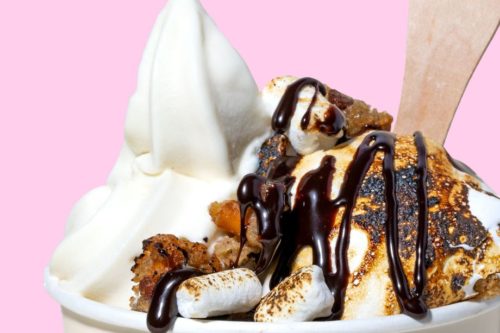
To fit into the camp theme, Milk Bar will have a sundae bar with a rotating special — starting off, appropriately, with a s’mores sundae of cereal milk soft serve topped with compost cookie crumbs, charred marshmallows, fudge sauce, and marshmallow sauce. The sundae bar also has very Milk Bar-esque topping options such has cornflake crunch, confetti cookie crumb, and blueberry corn. And Milk Bar classics — crack pie, corn cookie, birthday cake truffles — fill out the rest of the menu, in full below. There’s also Counter Culture coffee.
This week (May 23 to May 27), Contractors will continue to excavate earth and rock, and load out material. We will complete the underpinning of the adjacent buildings. Installation of rakers, line drilling, lagging and sheeting around the perimeter will progress as well. Concrete foundation walls are scheduled to begin.
The following week (May 30 to June 3), we will continue line drilling, rock excavation, and loading out, as well as lagging and sheeting.
Concrete foundation walls will progress.
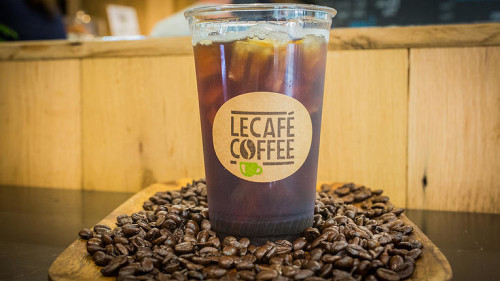
Yet another place to get coffee: Le Cafe Coffee on 4th Ave. between 13th and 14th.