Gone: Babu Ji
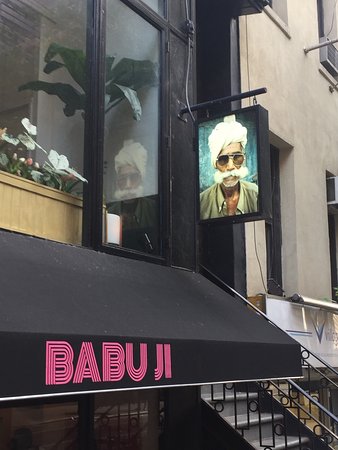 Another pandemic victim: Babu Ji on 13th St. It was the sixth restaurant to have a go of it in the space in the past 25 years.

Another pandemic victim: Babu Ji on 13th St. It was the sixth restaurant to have a go of it in the space in the past 25 years.
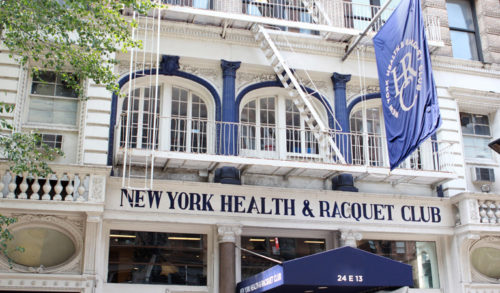 After almost 40 years, the New York Health and Racquet Club on 13th St. is no more. A few branches of the gym will be taken over by a competitor, but not this one. End of an era.
According to transit data from MTA and Citi Bike, Union Square continues to be one of the City’s top destinations for employees, residents and visitors alike. While subway ridership remains low across the system, currently 20% of normal use, turnstile activity at the Union Square-14th Street station has tripled since April.
Similarly, bus ridership on the M14A/D busway is gaining momentum as average daily bus ridership has tripled since its low point in late March, reaching nearly 60% of pre-COVID daily ridership levels. For those visiting the district by Citi Bike, Broadway and 17th Street remains one of the City’s top 10 destination stations and ridership is up 45% since April. Another popular end station, Broadway and East 14th Street has experienced a 57% increase in use since April.
Other indicators are up too. Union Square’s public Wi-Fi use is up to 42% from 15% at the start of the pandemic, signaling an uptick in outdoor activity. The district’s active public realm can be attributed to the draw of the Greenmarket, the expansion of outdoor dining activating sidewalks and roadways, and the reopening of local business that attracts steady foot traffic across the district.
Union Square’s zip codes (10003, 10010 and 10011) make up 16% of Open Restaurants applications in Manhattan with the City’s highest number of applications located in 10003! Within Union Square-14th Street, nearly two thirds of businesses are conducting storefront activity and this number continues to grow as additional businesses and cultural institutions are making exciting plans to open their doors with events and programming as soon as it is safe to do so.
Visit Koi, at 32 Union Square East. They say:
A celebration, a date or just a relaxing break in the day, there is always a reason to get together around a cup of KOI tea. KOI brings joy to the world. Freshly brewed tea and flavorful ingredients, prepared with passion are the key to KOI’s authentic taste and the reason why people come back again and again. In each and every KOI store, the staff is keen to share our happiness and love of tea with you. They do their best every day to make your experience memorable. Hear the sound of tea being brewed, of ice being crushed, and of laughter. Smell the aroma of our freshly prepared ingredients. Be excited by the chewiness of our milk tea pearls. Enjoy the fun and comfortable surroundings. And the warmth of our tea shakers. With KOI, happiness happens naturally.
They are dropping like flies. Goodbye to Nanoosh, Nix, Blue Stripes, Le Midi (in our building) Le Maison de Croque Monsieur, and more. What will replace them?
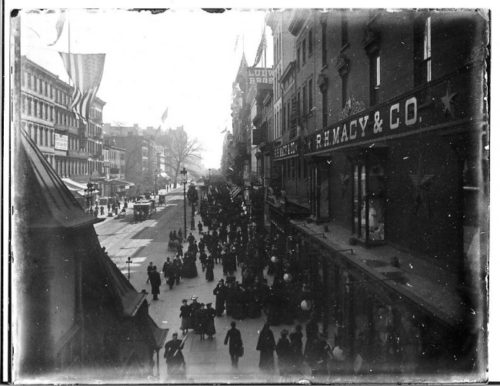
Here’s a 1910 view of the south side of 14 St. looking east from 6th Ave. from what was then the platform of the elevated train. As you can see, Macy’s was headquartered there (where Urban Outfitters is now) and expanded along the block over time as it grew. Eventually, the cobbled-together space got too complicated and the store decamped for its massive new digs in Herald Square. If you look closely at this building today, you can still see vestiges of Macy’s red star icon in a few places.
 Zappos — the Amazon-owned online shoe retailer — appears to be launching a brick-and-mortar location.
Zappos has leased the three-level, roughly 16,000-square-foot corner of 19 Union Square West at 15th Street that was previously home to American Eagle and its concept-store spinoff, AE Studio.
from 6sqft:
Pioneering food hall operator Urbanspace is opening its latest outpost at Union Square reports the NY Post. They’ve leased 10,000 square feet at Zero Irving, the contested tech hub on 14th Street that will serve as office space, a technology training center and incubator, co-working spaces, and an event space when it opens in the first half of 2021.
Located at 124 East 14th Street, at the former site of the P.C. Richard & Son building, Zero Irving has faced opposition for years, as local preservationists and community groups felt that the rezoning required for the development should have included protections for the surrounding neighborhood, which is largely low-rise and residential.
Nevertheless, the $200 million project has been under construction for the past year. Despite the thousands of small business closings around the city, UrbanSpace founder and president Eldon Scott is confident in what will be his company’s fifth food hall in New York City. “We have the ideal business model to help the New York culinary world recover,” he told the Post.
UrbanSpace’s other locations are Urbanspace Vanderbilt near Grand Central (the first location, which opened in 2015), Lexington Avenue and 51st Street, 135 West 50th Street, and 152 West 52nd Street. They’re also behind the holiday markets in Grand Central, Union Square, Columbus Circle, and Bryant Park, as well as seasonal food market pop-ups like those at Madison Square and the Garment District.
This year’s annual Co-op Board Meeting will take place via Zoom on July 30 at 7 PM. Please see your e-mail or the mailed notification to get the Zoom log on information.
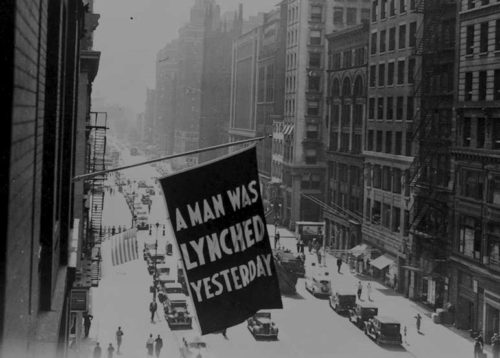
The first headquarters of the NAACP, was at 69 5th Ave., where the New School building is now. From 1920 to 1938, they flew this flag whenever they received a report of a lynching anywhere in America. This view, which hasn’t changed much, is looking south on 5th Ave.